A Clean Sweep for Clipperton TX5K

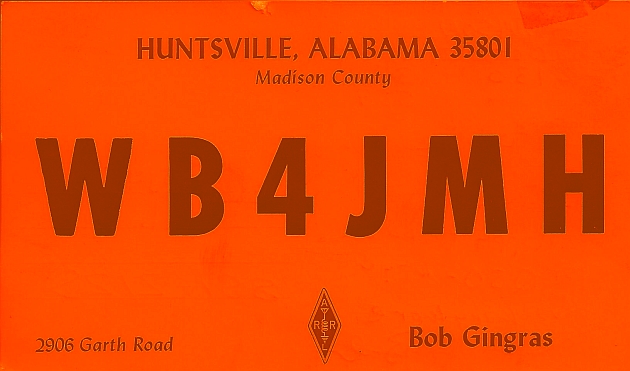
I have been spending a bit of time since Monday trying to work the Clipperton Island DXpediton, TX5K, on all bands and modes.  I was finally able to accomplish that during lunch today, with a 10-meter CW contact completing the sweep.

10-meters has not been very productive recently, with the SFI low, but I had noticed a 30 to 90 minute window around lunch every day when I could hear TX5K (I had also listened around local sunset but never heard a peep).  So each day during my lunch break, I’ve called them.  Today, a day before they pack up shop to leave the island, I was finally successful.  Thanks to the entire Clipperton team and congratulations for making well over 100,000 contacts.  Outstanding job!

10 meter CW QSO with TX5K

10-meter CW QSO with TX5K completes the sweep!

Posted in DX, From the OM, Operating | Leave a comment

A Repeater Finder App for IOS and Android (and the web)

While I had programmed every repeater in my local area into my IC880H before installing it in the truck, I had no idea exactly where the repeaters were located, and I discovered that I was not able to bring all of them up.  I had purchased one of the small editions of the ARRL Repeater Directory to help guide me, but that wasn’t the easiest thing to use.

Yep — there’s an App for that.

Enter RFinder The Worldwide Repeater Finder.  This company has a simple to use App that is available for IOS and Android devices.  It isn’t free, it costs $9.95, but that includes full use of the database for a year (it can be renewed each year).  Once you’ve bought the App for one device, you use your logon credentials to access the service on any device (phone/tablet/PC).

RFinder has a basic search screen that allows you to search for repeaters within a specified distance from your current location (GPS position), or any other location that you would like.  You can also search for a specific machine by call sign.  As you can see from the image below you can restrict your search to certain bands as well

RFinder Search Screen

RFinder Search Screen

Once you set your search parameters, you press the “Update List” button which fetches the data.  Pressing “Show List” presents a screen like this one:

RFinder List of Repeaters

RFinder List of Repeaters

And if you press the “Map” button you will get a view that looks something like this:

RFinder Map View

RFinder Map View

I really like the map view as it plots my current location and gives me a good idea of where the machines are with respect to my location.  If you touch one of the towers on your screen you will see the call sign, frequency, offset, and PL information.

The only drawback I see so far is that you have to have a live data connection on your phone for the application to work.  That also means if you don’t renew the subscription you don’t retain access to your out-of-date data (unlike one of the printed guides which remains useful).  But given the price (cheaper than the list price of a Repeater Guide), the fact that the data is updated constantly, and what you can do with the data, that sounds like a good trade-off to someone who is on the road with ham radio.  Besides, that is one less thing I have to worry about lugging along with me as I always have my phone.

Posted in D-Star, From the OM, Gear, Operating | Leave a comment

Mounting a VHF/UHF Gain Antenna on a Chevy Avalanche

My WB4SON-mobile is a Chevrolet Avalanche.  Despite the fact that I’ve owned that truck for over a decade, I’ve never had a permanently mounted rig or antenna, relying instead on my handheld with a mag-mount antenna.  After about the sixth time of forgetting to take the antenna off the roof before entering the garage, I decided it was time for a permanently mounted antenna, but one that could be raised or lowered remotely.  Adding to the challenge is the fact that the Avalanche is quite tall, clearing the garage door by only a few inches.

I finally decided on a Diamond Antenna K9000 LRMO Motorized Antenna Mount.  (Note I said LRMO, the “O” means “Oversized” — my dealer insisted the standard LRM would work — it is simply too small).  This was mounted to the luggage rack, with the control cable and coax passing into an existing gasket between the passenger front and rear doors (sealed with a bit of RTV to prevent water incursion).  The two cables conveniently fit underneath the gasket, which allows them to be directed around to the front of the vehicle where they exit at the end of the gasket between the front door and quarter-panel.

AntMount

Diamond K9000 LRMO Motorized Mount.

The only only trick I used was getting the coax and cable into the passenger compartment.  To do this, I pinched the gasket along the front edge of the door, and cut a small slit about 3/8″ long close to the base of the gasket.  This allowed me to pass the control cable and coax through the slit, putting the cables on the inside of the door frame.  At this point they were simply routed into the fuse box area of the dash as shown in the photo below.  Note that the gasket was also sealed with a bit of RTV to keep it from leaking and to avoid the slit growing longer over time.

Cables entering passenger compartment via slit in door gasket

Cables entering passenger compartment via slit in door gasket

Finally, the radio was mounted to the center console.  Here are two photographs of the antenna (a Diamond SG7500A) raised and lowered.

Antenna lowered prior to entering garage

Antenna lowered prior to entering garage

Now all I have to do is to remember to put the darned antenna DOWN when I pull into the garage!  The rule is:  If the rig is OFF the antenna is DOWN.  Heaven help me when I forget (actually the mount allows that to happen).

Antenna in operating position (tip is ~10 feet tall)

Antenna in operating position (tip is ~10 feet tall)


Posted in D-Star, From the OM, Gear, Operating | Leave a comment

TX5K 18 MHz P3 Capture

The KX5K DXpedition is creating a rather wide pileup on the 18 MHz band as you can see from the screen-capture below.  The Green and Red cursors are about 7.3 KHz apart.  The Green cursor is on TX5K signal, which has been calling for responders to reply “UP”.  Things you can observe:

  • The pileup is about 10KHz wide, which is pretty large for a DXpedition.  Most CW pileups are about 5 KHz wide, often 2 KHz wide.
  • There are a large number of responders.
  • It is still pretty easy to find an open spot if you try.
  • Despite the calls for “UP” you can see several optimistic fools replying DOWN.

TX5K P3 Display 18 MHz

Posted in DX, From the OM, Operating | Leave a comment

Clipperton, TX5K, has fantastic real-time world view

After begin “slimmed” by a pirate on 3/1, followed by a busy family weekend, I finally had an opportunity to work TX5K on Clipperton Island (for real) using 30m CW.  Despite the relative calm of the 30 meter band, the pileup was huge.  Still, it was just a matter of patience (30 meters tends to be a great equalizer; all stations running similar power and antennas).

TX5K DXA

I was VERY impressed with the www.DXA2.org website, shown above, that gives details about the current operation of TX5A.  I knew within seconds that I had made it through to the log.

PS: By the next day I had them on 8 bands and all modes.  The only band I’ve been unable to hear them on is 10 meters.  Even 160 meters was quite strong considering the path distance.  Fuel was delivered to the island this morning, so they are back on the air with all their rigs (they had cut back to 3 rigs when fuel was running short).

Posted in DX, From the OM, Operating | Leave a comment

Zippy LiFe 4200 Battery Self-discharge Test: 4% perMonth

A month ago I published some test results indicating a Zippy LiFe 4200 battery did have a capacity near its manufacturer’s claims (in fact slightly better than the claim at a C/2 discharge rate (2.1 Amps).  That original curve is reproduced here:

Discharge Curve, Zippy LiFe 4200 battery at C/2 rate (2.1 Amps)

Discharge Curve, Zippy LiFe 4200 battery at C/2 rate (2.1 Amps)

After completing the reference test above, I fully charged the battery at a “C” rate (4.2 Amps), then let it sit idle for a month.  Finally I discharged the battery at a C/2 rate (2.1 Amps), which produced the following discharge curve:

Discharge Curve, Zippy LiFe 4200 battery at C/2 rate (2.1 Amps) After 30 days of storage

Discharge Curve, Zippy LiFe 4200 battery at C/2 rate (2.1 Amps) After 30 days of storage

The conclusion is that the Zippy 30C Series 4200 High Discharge LiFe Battery lost about 4% of its capacity due to self-discharge during a 30-day storage period.  That is a fair result, but not great.  A “typical” LiFePO4 battery will lose about 2% of its capacity per month.  The Zippy battery was about 2x that loss rate.  That might be acceptable given the relatively low price of the Zippy batteries.  Testing of my relatively old K2Energy battery indicated a self-discharge of less than 1% per month, for example.  But on a watt-hour basis, the Zippy battery is about 1/2 the cost of the K2 Energy battery.

Posted in Alternative Power, From the OM, Gear, QRP | Leave a comment

Thinking of the peak of Solar cycle 24

Solar Cycle 24 Prediction

Solar Cycle 24 Prediction

Its a glass half-empty vs. glass half-full thing.

According to NASA, we are close to the peak of Solar Cycle 24; they are predicting summer of 2013.  However the smoothed numbers have actually been running below the mean prediction level for the past year, making some believe that the decline has already happened.  Sill I would think we have at least 3-4 more years of decent activity, above or at levels similar to when I restarted the hobby in Feb of 2011.

Most of my higher band DXCC work is close to complete, leaving me 80 meter DXCC to finish (I need 38 more countries there).  As the solar activity declines, the 160 & 80 meter bands will improve for DXers.  So there is hope for 5BDXCC.

And life since Feb of 2011 has been pretty outstanding.  I have 168 confirmed countries out of 206 worked, with DXCC on Mixed, CW, Phone, 20m, and 15.  I am missing 1 for my DXCC Digital, 38 on 80m, 4 on 40m, and 10 on 10m.  With the exception of the 80 meter band, all the other DXCC achievements seem possible this year.


Posted in DX, From the OM, Operating | Leave a comment

DXCC in a weekend (and other random musings concerning the ARRL CW DX Contest)

I’ve been told that timing is everything in life.  If that is true then I’m in trouble, because timing ISN’T my forte.  Take for example the New England Blizzard of 2013 that descended upon RI like a ton of bricks last week, putting people in the dark and cold, and making travel for folks trying to get back home impossible.  I totally missed the CQ WPX RTTY contest because of that and still owe my wife about 20 more inches of snow shoveling, which I missed out on as I spent several days making my way from San Diego back to Rhode Island.

Timing raised its head again during the ARRL CW DX Contest this weekend.  I had pretty much blocked out the time, taking a few breaks to socialize with my family, and I was deep in the hunt trying to work 100 unique countries over the weekend (a mental DXCC, if you will).  I had been anxiously watching the numbers tick up from the 80s into the 90s, then crawl up to 97, 98, 99, then — brick wall!  I thought there was some slim hope until two things happened at the same with about 2 hours to go.  My wife told me: “You need to go out and pick up pizza for the girls at 6PM” (My daughter was having a sleep-over, that for the record, was setup AFTER I made plans for the contest).

OK, not the end of the world.  I got that assignment while I was waiting in a HUGE pileup for a CE9 station (theoretically going to be my #100 — South Shetland Island).  But a few minutes later I figured out that someone had spotted the station wrong.  It wasn’t a rare Antarctic station.  It was a rather ordinary Chilean CE3 station.

With about 45 minutes left before I had to pull the plug, I desperately scanned the bands from bottom up.  New countries weren’t to be found.  I finished with 443 stations worked,  356 band-countries, and 99 unique countries — or so I thought.  A final recount revealed a discrepancy.  My log showed I had worked 7 African countries, but I had counted only 6.  Without knowing it, I had managed to hit #100 when I worked FG8Y in Guadeloupe at 19:21Z, a couple of hours before!

In the end, I managed to work 3 new countries, bringing my total to 205.  No doubt I have several additional bands for some of the countries too.  I worked about a half-dozen “Clean-sweeps” (A station that you work on all possible contest bands 160/80/40/20/15/10 meters).  And several calls have become memorable to me, like my Peruvian friend Ed, OA4SS, who shows up on almost every contest and band I work.

So at the end of the day, what do you get for working 100 unique countries during the ARRL CW DX Contest?  Nothing but the self satisfaction, which is all that really matters in the end.

And a final note, as I often do, I sat back in wonderment at the ability to reach out and talk to so many people in places so far away.  It was almost easy.  My dad would have loved to see that.  I trust he heard my silent thoughts as I wished him good DX.

Posted in Contests, DX, From the OM, Operating | Leave a comment

Closing in on 5BWAS (sort of)

Using LotW, a couple of weeks ago I completed WAS on 20 meters.  Today I completed it on 40 meters.  Still a long way to go, 80/15/10, but I’m getting closer.  I need:

6 more on 80 meters (Missing: Alaska, Idaho, Louisiana, Montana, Oklahoma, West Va)
3 more on 15 meters (Missing:  Iowa, Maryland, Michigan)
16 more on 10 meters (Missing: too many to list)

On both 80 and 15 meters, I have worked one or more stations in those states, but they have not confirmed via LotW.   But 10 meters is a challenge for sure.  Most of what I am missing is located fairly near by.  All the distant ones (Hawaii, Alaska, etc.) are done.

I suspect I may complete 5BDXCC first, even thought I am still missing 45 on 80 meters, 5 on 15, and 14 on 10 meters.


Posted in From the OM | Leave a comment

Initial Test Results on Zippy LiFePO4 4200mA 4S battery pack

There has been substantial discussion, but not much in the way of published test, on the “Zippy LiFe” batteries offered by Hobby King.  Hobby King has been supplying RC hobbyist LiPo batteries for years and recently started offering a LiFe variety.  The pack sells for about $46.  The price was the primary attraction for trying this battery out, as I am not a big fan of batteries that require specialized balancing charger.  But it was possible to buy this battery and a charger for about $108 including shipping, so I thought I would give it a try.

The battery was slightly heaver (+10%) than specified, coming in at 560 grams as opposed to 512 grams, which is about 1.25 pounds.  Having had bad experiences with RC LiPo batteries (over specified), I was anxious to put this one on the battery tester and see if it met the 4200mA claimed capacity.  I do all my tests at a constant C/2 rate, so 2.1 Amps in this case.

I was very pleasantly surprised to find that after cycling the battery 3 times (discharge to 10.0 volts, then full charge to 14.4 volts at a C/1 rate), that the battery had a true capacity of 4297 mAH, or about 102% of its rated capacity.  Additional tests will be performed over time.

Click here for a PDF of the test results: Zippy High Discharge LiFe 30C Series 4200 Battery Test

As you can see from the discharge graph, battery voltage stays very flat, but rapidly falls from 12.0 volts down to the test cut-off at 10.0 volts in about 8 minutes out of the 122 minute total run time.  So 7% of the capacity remained after the battery dropped below 12.0 volts.  While the specification calls for a test cutoff at 8.00 volts, I terminate my tests at 10.0, and see no reason why someone would take it below 11.0 volts.

Discharge Test @ C/2 Rate for Zippy 4200 mAH LiFe Battery

Discharge Test @ C/2 Rate for Zippy 4200 mAH LiFe Battery


Posted in Alternative Power, From the OM, Gear | Leave a comment