If I could only have one band it would be…

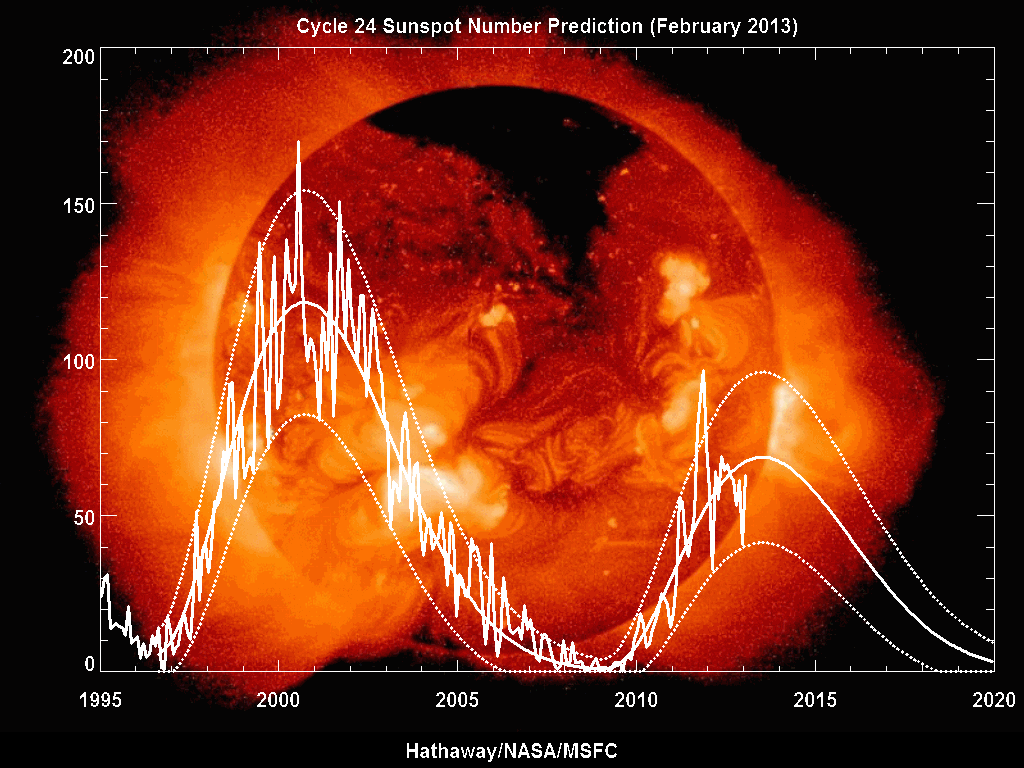
Many years ago my father and I would debate this endlessly.  His choice was 40 meters.  Mine was 20 meters.  After restarting my ham radio hobby 2 years ago, I’ve had a chance to track things carefully this time around, and observe my success on all the bands.

From my recent experience, it appears clear that 20 meters is the “winner”, as it was the first band I completed DXCC on, and WAS on.  Other bands were close of course.  For the DXer, 15 meters seems to be #2, but for WAS 40 meters is #2.

Neither 20 or 40 is optimal.  For 20 meters, the band is small and very popular, leading to lots of QRM but presenting lots of opportunity.  For 40 meters, the band is even smaller, filled with broadcast stations and more atmospheric noise.  In my mind, there is no doubt that if I could only have one band, it would be 20 meters.

Posted in DX, From the OM, History, Operating | Leave a comment

A Complete “On-the-go” Ham Station Under Six Pounds!

Would you believe 5.75 pounds (or less)?  What’s in the “On-the-go” bag?

Elecraft KX3 with Internal Tuner
Elecraft Paddle and Hand Mic
Headphones
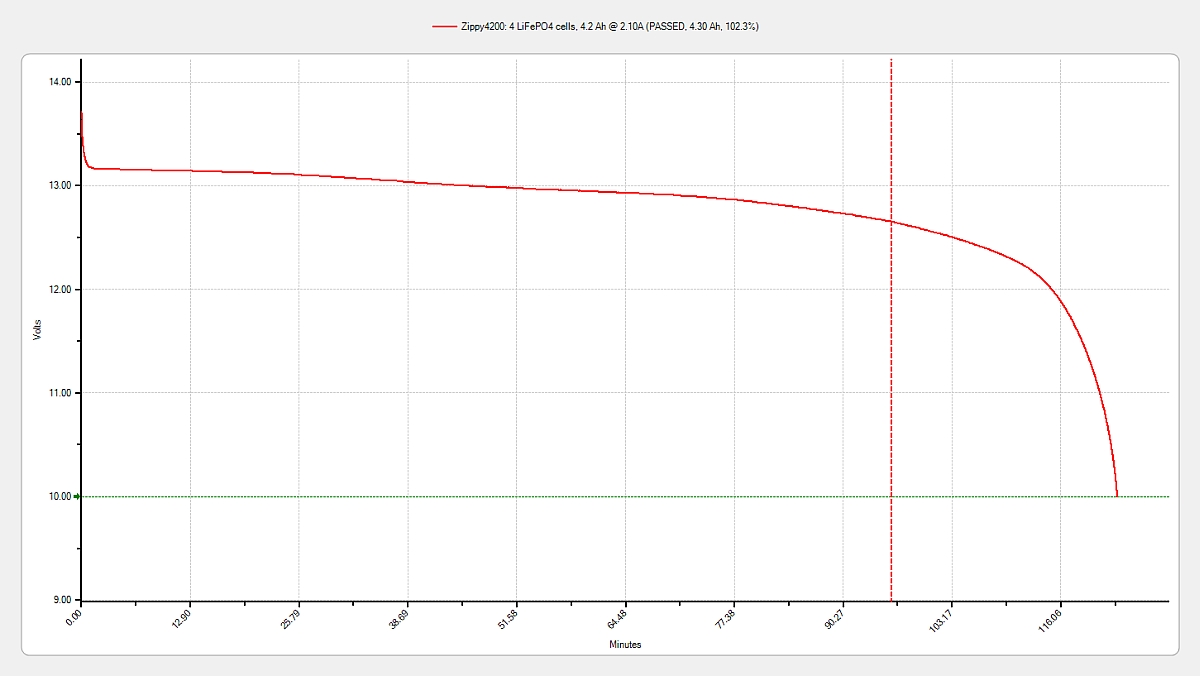
Two sets of Sanyo XX 2.4AH batteries (16 hours of operating)
DC Power Cord w/Powerpoles & Cigarette Plug, plus USB Interface Cable
25′ of Coax
20m Dipole
Four sets of lines (116 feet total) for erecting the antenna
Gerber Multi Tool
Wrenches to adjust Paddle
Electrical Tape & Wire Ties
Flashlight
Notebook, Sticky Notes & Pens
Lowepro Edit 140 Bag

The bag measures about 10″ x  7″ x  7″.  Swapping the 20 meter dipole and coax out for a 53 foot end-fed wire with 27 foot counterpoise drops the weight below 5 pounds

On-the-go-bag

On-the-go-bag

Posted in From the OM, Gear, QRP | 10 Comments

LotW at 160 with J8/W6HGF

My thanks to W6HGF, Al Danis, for his recent DXpedition (dare I say vacation?) to Saint Vincent Island.  I hear he made over 3,000 hams happy during his two week run.  I can’t wait to see what his QSL looks like, but he had Club Log and LotW uploaded by the morning after our 40 meter RTTY QSO.

So that puts me at 160 countries confirmed in LotW, with 95 Digital QSOs.  Five more to go for DXCC Digital.

(I was at 150 in LotW as of about 7 weeks ago, so the numbers are creeping up slowly.)


Posted in DX, From the OM | Leave a comment

2012 Wrap-Up and 2013 Goals

2012 was a great year of Ham Radio for me.

I completed 2,724 QSOs, and participated in multiple contests.  I won the 160 Meter Contest in the QRP Category for RI, and had clean sweeps in both the Phone and CW Sweepstakes contests.  I received my Mixed, Phone and CW DXCC Certificates, and qualified for the WPX Honor Roll.  I finished the year with 141 countries in the Diamond DXCC Challenge.  The highlight of my year was joining the Newport County Radio Club and getting a chance to run their CW station during Field Day.

My goals for 2012 were working 200 countries, and getting 150 confirmed in LotW.  I managed to work 202 and got 154 confirmed.  I also wanted to work 2,500 stations.  So I completed all my goals.

What will 2013 bring?  Some of my goals:

  • Get 175 confirmed countries in LotW
  • Work 225 countries
  • Get DXCC Digital (Completing DXCC Triple Play)
  • Get a WAS Triple Play (CW, Phone, Digital)
  • Submit an article for publication in QST


Posted in Contests, DX, From the OM, History | Leave a comment

WB4SON NTP Clock

The basic clock function was too simple.  Not including the LCD library, supplied by Adafruit (the company that makes the LCD Pi Plate), a total of four lines of Python code are required to write the local time zone date/time and the UTC date/time to the LCD. Like this:

now = datetime.datetime.now()
utc = datetime.datetime.utcnow()
lcd.message(now.strftime(‘%b %d %H:%M:%SE\n’))
lcd.message(utc.strftime(‘%b %d %H:%M:%SZ’))

The first two lines read the system time and store it using datetime format.  The first line saves the local time (now), and the second line saves the UTC time (utc).  The next two lines write the date/time info out to the display with the local time on the first line and UTC time on the second.  It looks like this:

WB4SON NTP Clock showing Local & UTC time

WB4SON NTP Clock showing Local & UTC time

What took a bit of head scratching was avoiding a fairly ugly situation where the upper line might update first, showing something like “Dec 30 20:19:45E”, while the second line lagged behind at “Dec 30 01:19:44Z” for a fraction of a second.  This lag was due to inefficiency of writing two entire lines to the LCD every second tick.  After all, only once in every 60 updates does the minute field change.  And only once in every 3600 updates does the hour field change.   So I optimized the code to perform the minimum amount of updating required by each situation.  The result was that the second fields on the upper and lower line now change at virtually the same time.

I embellished the project a bit by adding a sign-on screen that shows for 10 seconds after power is applied to the RPi.  It shows the IP address of the Clock, which is useful for connecting to it remotely since it doesn’t have a traditional keyboard and display.

WB4SON NTP Clock sign-on message

WB4SON NTP Clock sign-on message

Posted in From the OM, Gear | 2 Comments

Does Raspberry Pi and Ham Go Together?

At a recent breakfast with fellow hams, Ted, W1GRI, showed me his latest gadget — A Raspberry Pi (RPi).  This is a small computer with ARM CPU, 512K of RAM, a SD card for flash memory, two USB ports, a HDMI video/audio port, an Ethernet connection, and composite video/audio output.  His unit was enclosed in a small clear plastic box, about 4″ x 2″x 1″, and he waxed poetic about how it could run Linux and was a pretty full-featured computer.  Not bad for something that sells for under $40.

My ham shack is underground (named “The Wombat Room” after the Australian Wombat) so Atomic Clocks are pretty useless as the WWVB signal won’t penetrate below grade.  However, I am obsessed with accurate time, and have considered building a clock that would display both UTC and EST/EDT but use NTP time services for keeping accurate time.  Until the Raspberry Pi came along, other development boards that include an Ethernet connector were large (>4×6 inches) and expensive (>$150).  Then some sort of display and case would have to be hacked together.

But as I investigated the Raspberry Pi, it because clear that this little gem was ideal for accomplishing what I had in mind, especially since there was an entire ecosphere devoted to supporting RPi users.  Sure enough, a company called Adafruit was selling a “Pi Plate” that is designed to plug onto the top of the RPi.  My particular plate sells for <$20 with a blue LCD and allows the user to attach a display with a few push buttons to the RPi

Raspberry Pi with LCD Plate (box, RPi and Plate from Adafruit)

Raspberry Pi with LCD Plate (box, RPi and Plate from Adafruit.com)

Today I put the LCD Plate together (some minor soldering required), hooked it up to the Raspberry Pi (in place of the clear plastic box cover), downloaded the various software modules needed to support I2C communication to the plate, plus some test Python code, and I was up and running with a working display.

Test of Display Running on Raspberry Pi LCD Plate

Test of Display Running on Raspberry Pi LCD Plate

Since the RPi doesn’t have a real-time clock (at least not a battery operated one), it relies on NTP time services as part of the Linux OS to keep accurate time.  PERFECTO.  All I need to do is write a Python program that reads the system clock and spits it out to the LCD at the beginning of each second.  Once the program is debugged, I can set the RPi to load the code on power up and execute automatically.  At that point the traditional monitor/keyboard/mouse goes away.  All that is needed is a power supply and Ethernet connection, which could either be wired or WiFi through a USB dongle.

Total cost for the RPi, plastic box, LCD plate and power supply is less than $75.  Add another $13 for a WiFi Dongle if desired.


Posted in From the OM, Gear | Leave a comment

FEMA IS-802 ESF #2 Communications Completed

This was a VERY easy course, taking about 15 minutes to complete.  I was expecting procedure, but it was really Federal Alphabet Soup describing the responsibilities of all the various government agencies that would be involved in a national emergency that impacted communications.

IS-802 Emergency Support Function #2 Communications

IS-802 Emergency Support Function #2 Communications

Posted in ECOMM, From the OM | Leave a comment

DXCC Phone #41,162

Phone DXCC #41,162 has joined his brothers, Mixed #46,128 and CW #13,267 as of December 7, 2012.  In addition the 150 country endorsement for Mixed came in, as well as DXCC on 15 and 20 meters.

One of my goals for 2013 is to obtain Digital to complete a DXCC hat-trick.  Only 11 more to go on that mode.  DXCC 40 and 10 are not far behind.  The only challenge will be 80 meters, where I need another 57 countries.  I’m thinking pneumatic antenna launcher to get a dipole up about 120 feet, fed with open line.  Of course I could just try and get my 160 meter loop up that high too.

DXCC Phone #41,162

DXCC Phone #41,162

Posted in DX, From the OM | Leave a comment

Happy “Accurate” 12/12/12 12:12:12

Today is one of those special once-in-a-lifetime events; it is December 12, 2012. Or as people would commonly refer to it: 12/12/12.  I’d like to commemorate this auspicious event and describe a small iPhone/iPad App that I find very useful. Emerald Time

This tiny and free App runs on your iOS device and shows a highly accurate clock that has been adjusted using NTP services. Multiple time servers are used and closer servers are given more weight that more distant servers, so you really do have a highly accurate clock you can keep in your pocket. I use mine to cross check my PC time to ensure the special NTP software I use is working so that I don’t have issues with time critical software like JT65-HF.

I happened to be out-and-about running errands and captured a screenshot at 12:12:12 PM on 12/12/12 (the iPhone internal clock happened to be 1.608 seconds slow, but the time shown on the display has been adjusted for that offset):

Emerald Time App showing 12/12/12 at 12:12:12 pm NTP Time

Posted in From the OM, Gear, JT65A-HF | Leave a comment

A busy day for LotW and DXCC.

My LotW account had crept up to 149 confirmations over the past couple of weeks.  I also had a 3C0E QSL that was yet to be entered.  This had me toying with the possibility of making a trip to Newington just to have that one QSL checked so I could finish my year-end goal of 150 countries for Mixed DXCC.

Fortunately, in the past couple of days, confirmations have been pouring into my LotW account.  It is as if the CQ WW DX contest logs were finally getting processed.  Anyway, I was fortunate to receive two new confirmations: EL2LF in Liberia, and D64K in Comoros, bringing my LotW total up to 151.  And I managed to bump over 100 countries for DXCC Phone, 20 meter and 15 meter bands as well.

This morning I put the LotW online application to the test.  About 4 hours later I received a note saying they had approved the application.  That’s fast!

Posted in DX, From the OM | Leave a comment