Scratching the Itch…

Putting together a Doppler antenna switch for fox hunting (Handi-Finder) reminded me how fun making things can be.  It’s been many years since I’ve built a radio kit, and I’ve been itching to feel that “glow” you get when you make something yourself.

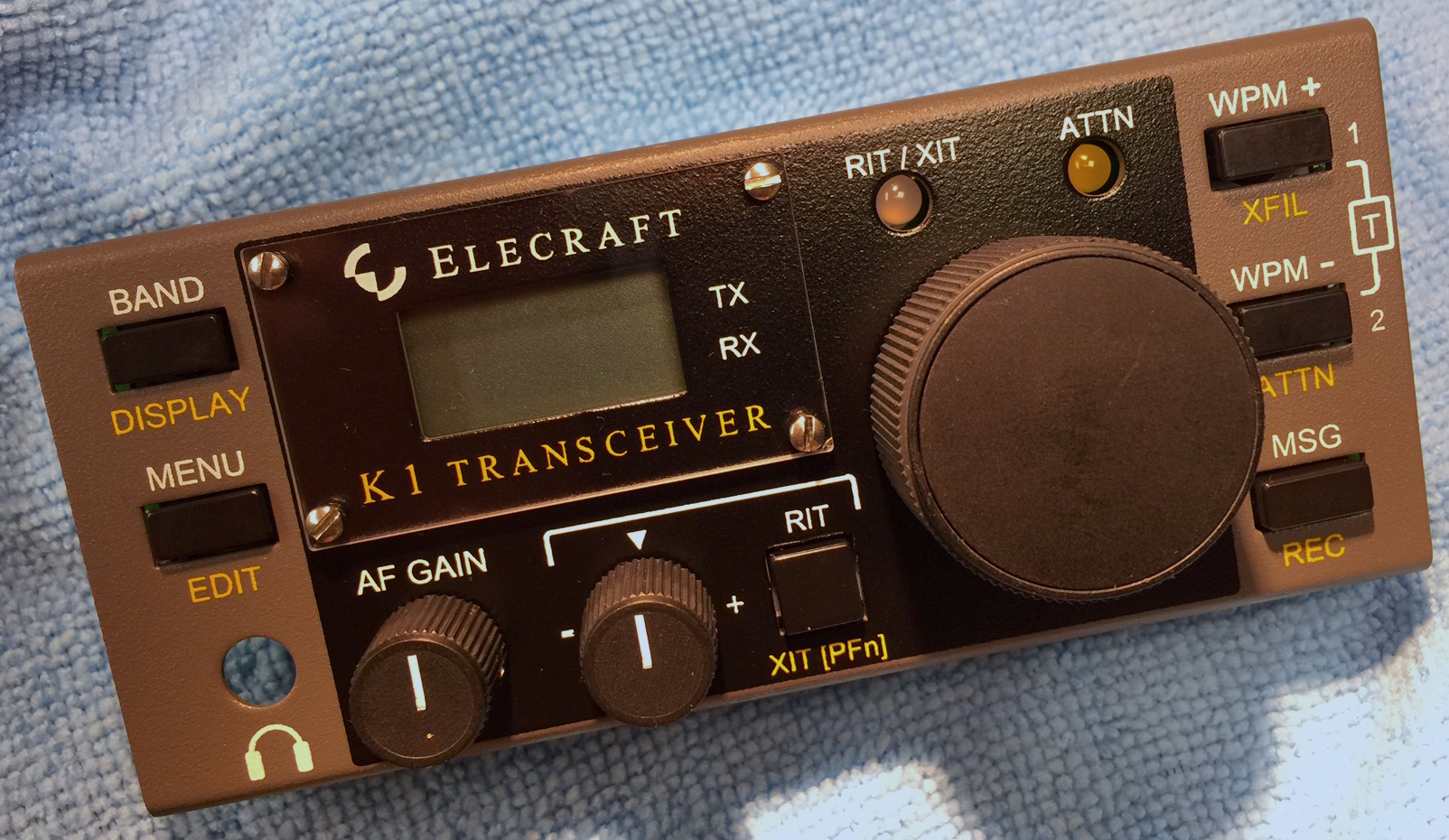
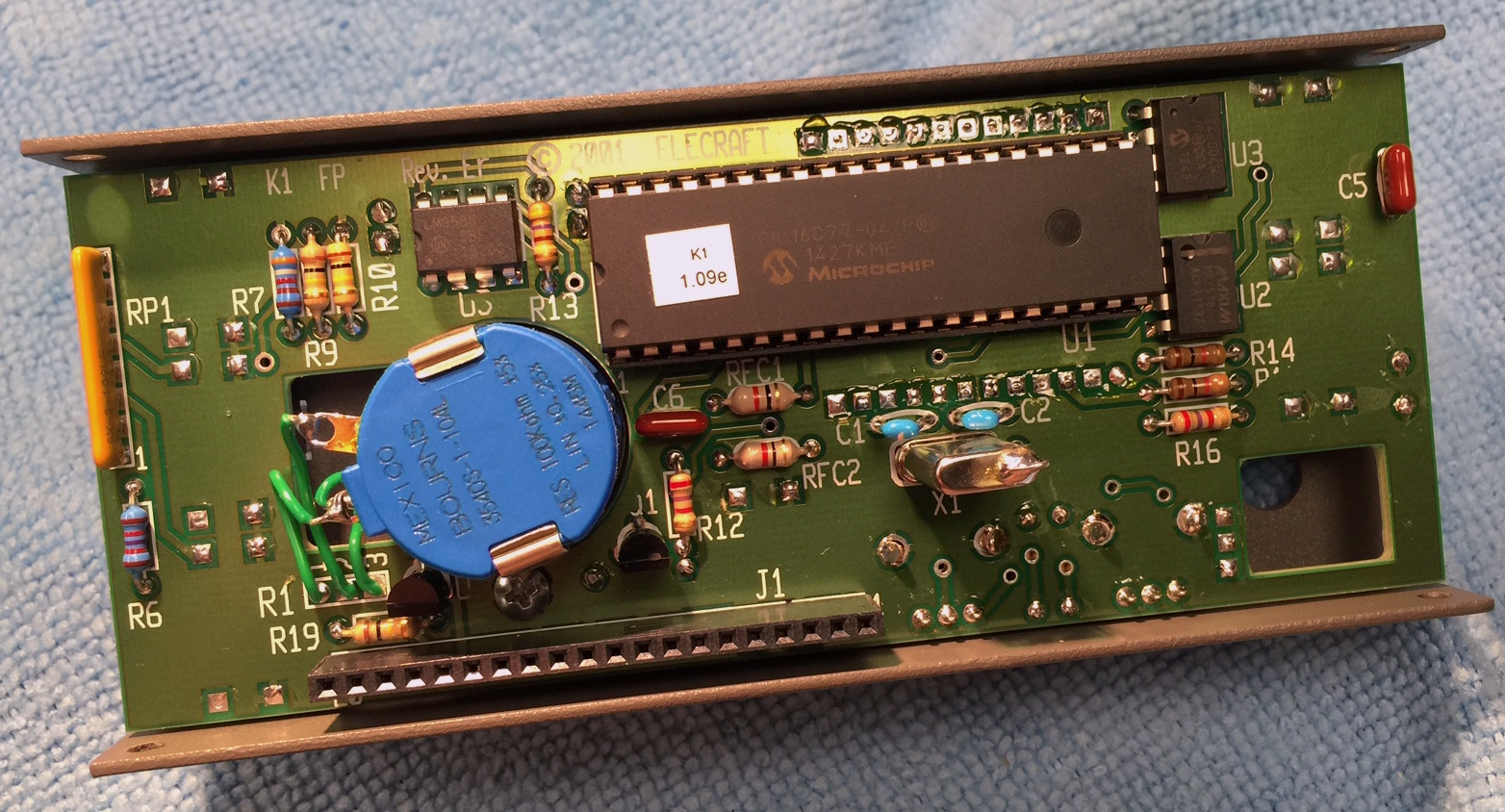
I decided to purchase an Elecraft K1 Kit for 30 and 20 meters (sadly the four band module is no longer available, so I was forced to pick only two CW bands — I’m going to miss 40 and 17 for sure).  Unlike current Elecraft “kits” which are nothing more than a mechanical assembly of pre-fabricated and tested circuit boards, the K1 is a “full kit”.  The user needs to solder all the components, fabricate the toroids, do alignment, and complete the mechanical assembly.  I’ve read that it takes about 24 hours to complete.

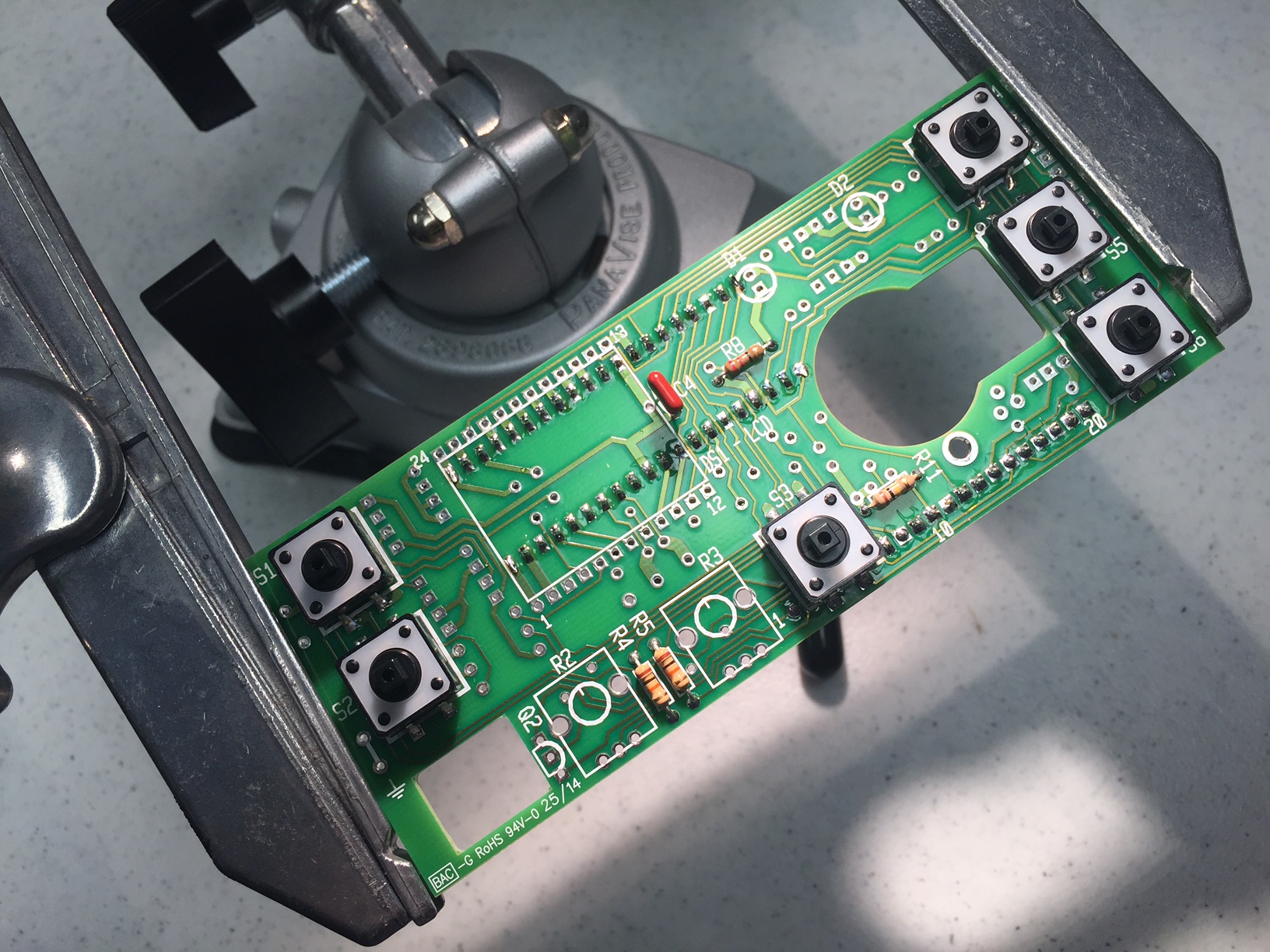
I spent about 3.5 hours inventorying every part and found everything there, including a few spare fasteners in case some got lost.  My only frustration with the inventory process was that some of the capacitors are almost impossible to read due to nearly invisible laser etching/printing.  As you can see from the photo below, there is quite a collection of parts (302 electrical, 127 mechanical, and 10 toroids to be wound) that will eventually find themselves onto three PCBs (Front Panel, RF, and Filter Board).

K1Parts

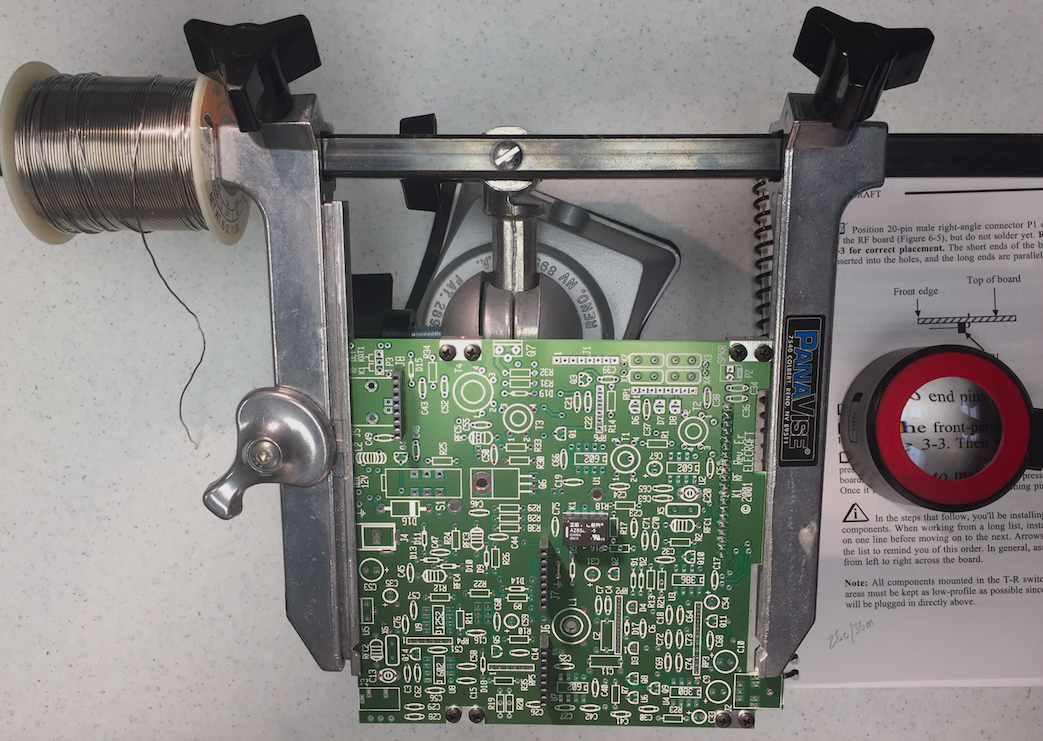
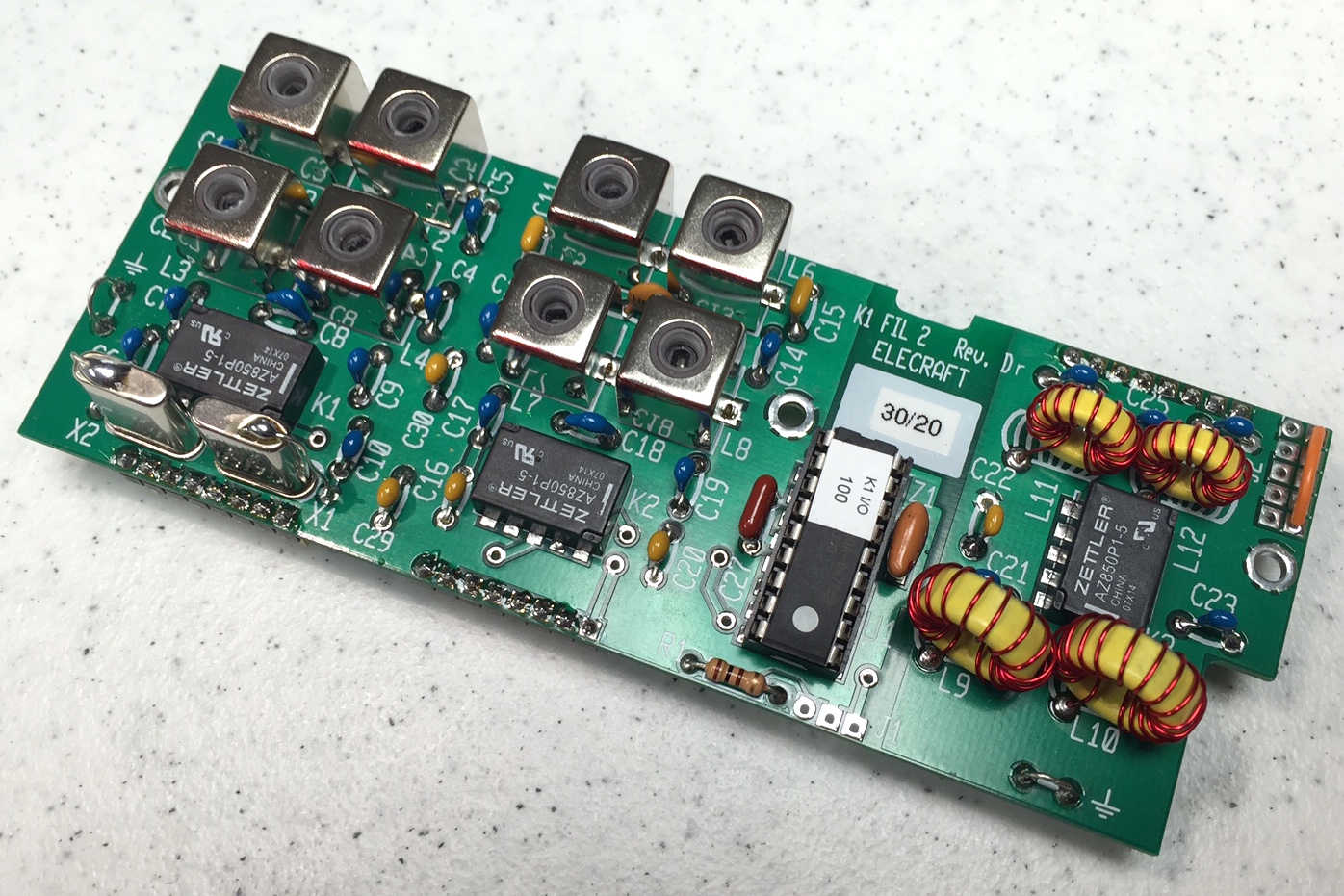
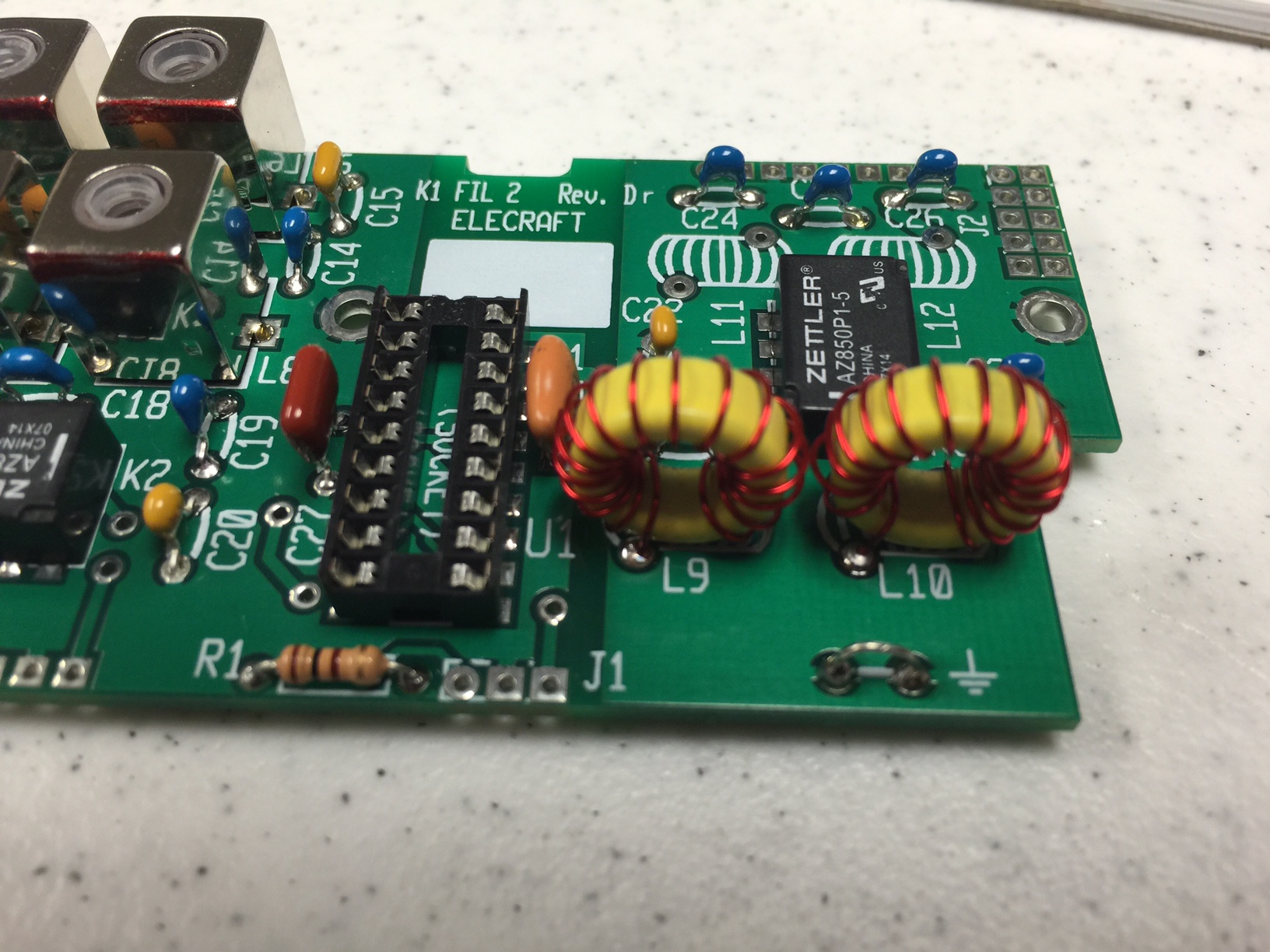
Those nasty caps came into play immediately as the first board to be assembled was the Filter Board.  So far, I’ve spent about 1.25 hours assembling the 30 meter band parts (less toroids, which are installed later).  So far that’s 24 parts in 75 minutes, or just about 3 min. a part.  At that rate I’ll need 900 minutes or 15 hours for the electronics and another 6 hours for the mechanical stuff — just about 24 hours total with the inventory time. Hopefully winding the toroids won’t skew that number too much.  My progress so far is shown in the photo below.

FilterBoardBand1

I must be a real New England Patriots fan as I’m going to watch their game against Denver rather than doing more assembly tonight.

Posted in From the OM, Gear, Projects | Leave a comment

Second Envelope from Incoming Bureau Arrives

After getting back on the air and having more success with DX that I had in the prior 40 years, I figured I’d send some envelopes to my incoming bureau back in Jan of 2012.  I received my first envelope with 8 QSLs this March.

Yesterday, I received my second envelope with seven QSLs.  Four were from 2011, two were from 2012 and one was from 2013.  That’s a 3-4 year long trip!

At least at this slow rate I won’t go broke sending reply QSLS out using International Forever Stamps ($1.20 each).  QSLs outbound to IZ5EKV, DL9CM, DD2UJ, VE6VS, DL0IL, UA6AGK, and EA7AJR

Posted in DX | Leave a comment

Happy November

Yesterday turned into a paperwork day for me, catching up on various odds and ends.  I finally applied to the OQRS systems for Chesterfield Island and Tuvalu Island, which, sadly, were my only QSOs for the month of October (I guess I could put a positive spin on things and say October was devoted 100% to All Time New Ones in DX).

Anyway, imagine my surprise when the TX3X conformation showed up almost immediately.  Talk about “Rapid LotW Upload”!

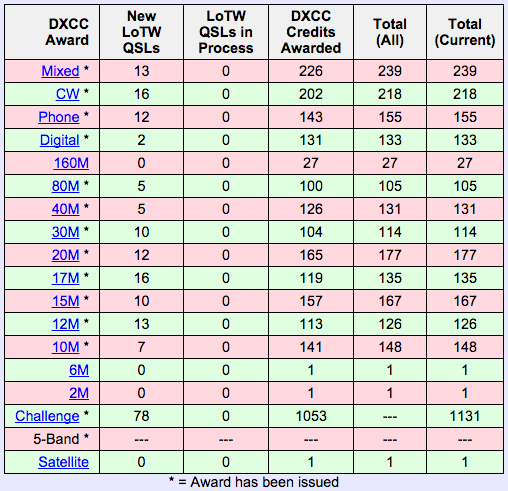
So with the passing of another month, here is the LotW DX standing:

Screen Shot 2015-11-01 at 9.29.50 AM

Add to this total 6 QSL cards, with 27 band-points for a total of 243 countries, and 1146 Challenge Points.


Posted in DX | Leave a comment

Yaesu G5500 Rotor to Green Heron Az/El Controller

The Primary Station for the N1ASA ARISS contact, happening sometime in the spring of 2016, uses a Yaesu G-5500 Az/El Rotor and a Green Heron RT-21azel Az/El Controller.

While Green Heron supplies fine documentation including the pinouts of both devices, they understandably don’t have a lot of detail on the connectors in use.  I suppose the connector fairies come in at night and attach the connectors to the cables.

Anyway, in the interest of full documentation, should something pop up during our ARISS contact, here is complete documentation on the connectors and cables used.  The two cables fabricated to the above document work just fine.

GH Controller


Posted in ARISS, Satellite | Leave a comment

K1MCS Participated in School Club Roundup

It’s a wrap — SCR is in the logbook.

21 non-ham middle school students participated at Monsignor Clarke School in the School Club Roundup and did very well.  Each student made at least one voice and one digital contact (often many more) for a total of 115 contacts.  K1MCS worked 28 Countries and 22 States.  They scored over 25,000 points and should do well in the Middle School category.

Many staff members came by throughout the day offering the kids encouragement.

My thanks to Principal Finnegan, and educator Julie Natanson for their support and encouragement, and for parent John, W1JPZ, who was my partner in this effort.

MCSPix2

MCSPix3

Posted in Education, Public Service | Leave a comment

Knot Good

Speaking of JOTA…

When putting a dipole up in the air (thank you Willy, W1LY), its a good idea to have two spools of cord — one per end.  During Field Day, we killed off one of my 1000 foot spools of paracord, and I had to open a new one for JOTA.

Unfortunately, that spool was defective, and one of the ends fell off leading to a tower of knots.

KnotGood

Posted in From the OM | Leave a comment

Thank You DX, From a JOTA Coach

For the past three years, Newport County Radio Club, has hosted the Boy Scout Jamboree on the Air (JOTA) in Portsmouth RI.  It’s always a good time for both the young scouts, who earn a Radio Merit Badge (16 of them did so this year), as well as for the older hams who wonder at the boundless energy of youth.

This year we were very fortunate to have a nice opening into Europe all day on 12-meters, and openings on 15 and 10 meters as well.  Each scout has to spend at least 10 minutes working other stations, and those QSOs were often with DX thanks to the openings.  To a one, every DX station, upon hearing the young voice, or the words “Boy Scout” stopped their pileups and slowed down to introduce a future ham to the hobby.

My favorite example this year came from a station in Guantanamo Bay Cuba.  They had been working a crazy pile-up all day long, and all of their contacts were “59 Guantanamo Bay, 73 QRZ”.  A young scout at the microphone, barely above a whisper, gave our call “Whisky One Sierra Yankee Echo”.  The KG4 didn’t get full copy, and in the interest of speeding things up a bit, I gave the call a second time and asked if he would mind saying hello to a young scout on the air.  Boy did that catch his attention.  He announced on frequency that all stations were to stand-by, then asked us to wait a moment.  A few seconds later he was back on the air and introduced us to an Eagle Scout, and described his own scouting journey.  A second scout was introduced who was going to take his General Exam in Guantanamo later that day.  Essentially, this DX station, who had been working at a rate of 10 Qs a minute for hours, took the time to make our scout feel special.

Again, I can’t emphasize enough that to a single one, every one of the DX stations we spoke with went out of their way to be kind an welcoming.

I’ve been told that I spend too much time on ham radio, that’s its only a hobby, and there may be some truth to that, but having a day like I did today, really really makes me grateful.  Thank you DX for making this a very special Saturday!


Posted in DX, Public Service | Leave a comment

A School Club Roundup Antenna for Monsignor Clarke School

John Z, N1JPZ, his son Rick, and I put up a temporary 30 foot mast and raised the 20-meter dipole up in the air.  (Actually John and Rick did most of the work, I just stood around looking useless and taking photos — although I did fabricate the dipole).

I have applied for a club call sign of K1MCS, and it looks like it will be issued on October 20th.  That is tight as our first day of operation will be on October 21st.  Twenty one students will be participating on the air.  Our plan is to rotate them on the air in groups of four every 45 minutes, Wed/Thu/Fri.

Hopefully after this introduction to Amateur Radio, the same kids will agree to do it again in February, after which we will start having 90 minutes of instruction each week until June — with a goal of getting them all licensed.

MSC 20m Dipole

Posted in Education, Public Service | Leave a comment

More AO-85 Telemetry Success

I kept my FUNcube Dongle Pro Plus (FCD) running all night long hoping to capture several morning passes.  Over a total of four passes it picked up 7 more frames — somewhat dissapointing.

It turns out that the automatic signal scanner was shifting up to about 145.993 KHz and capturing a spur, then sticking on that frequency.  Not good.  There is a parameter within the satellite .dat file that allows one to set the maximum frequency bound.  It’s default value was 145990.  I changed that to 145985 (I’ve never see the carrier at that high a frequency — in fact, even with Doppler, it seems to be no higher than 145981 at the beginning of a pass).

I hoped that change would help, but it doesn’t appear to prevent the AFC from locking onto that spur.  So unattended decoding might be difficult.  Only 1 more frame was captured during the next 30ish degree elevation pass.

During the next 30ish max Elevation pass tonight, I picked up another 11 frames by clicking on the spot that appeared to be the carrier frequency to me.

AO85 decent eye

Decent Eye Diagram and decoded data appear around 2341 UTC — this was the first frame decoded out of a total of 11 Note the spur about 14 KHz above the AO-85 Carrier


AO85201510152334 Pass

What the Oct 15 2335-2349 UTC pass looked like at FN41fn

Posted in Satellite | Leave a comment

Successful AO-85 Telemetry Decode

For a couple of nights, I had my IC-9100 hooked up and listed to folks chatting on AO-85, but I didn’t decode a single telemetry packet.  I suspected that the IC-9100 was filtering out the lower frequencies necessary for Data Under Voice (DUV) telemetry.  A check on the AMSAT maillist confirmed my fears.  “Don’t use the USB interface audio — decode from the 9600 output on the accessory jack.”  Ouch.  That sort of defeats the purpose of the single USB cable interface to the radio.

Plan B was to bring out my trusty FUNcube Dongle Pro Plus. Support for that SDR dongle is built into the FoxTelem decoding program.  Sure enough, during a pass between 2308 and 2323 UTC, I was able to decode 11 packets.  The first packet decoded was around 2314 UTC, and the last was at 2318 UTC.

The antenna is a M2 Eggbeater, but the preamp was not energized (normally it receives control voltage via the coax and the IC-9100).  I should still be able to power the preamp using 13.8 VDC directly (I still have those cables in place), as it appears that diodes will block the voltage from coming back down the coax and damaging the FUNcube Dongle.

unnamed

Setup couldn’t be easier. Select the FunCube Dongle as the input source. The sample rate and I/Q are automatically selected.

Nothing seemed to decode until I manually moved the cursor to the peak on an obvious signal around 145.980.  Once I did that everything appeared to be fine and it seemed to track the frequency gradually going down from Doppler.

unnamed

Experiment Telemetry indicates 7 packets received (out of 11)

unnamed

Spacecraft Telemetry indicates 4 frames received (out of 11)


Posted in Satellite | Leave a comment