Some random musings on the Boxboro Hamfest

I attended my first Hamfest this past weekend since my father and I went to the Rochester NY Hamfest back in the 1980s.  I went with a wad of cash in my pocket and a shopping list, and came back with the wad of cash intact (minus a few dollars for snacks and coax adapters).  It wasn’t that the Hamfest was disappointing — it just didn’t have what I was looking for.

The flea market area was probably 100×100 feet and held perhaps 60 or so vendors selling mostly abused vintage equipment from the 1960s.  I was surprised that more modern equipment wasn’t offered for sale.  The newest equipment seemed to be from the late 1980s.  Lots of Kenwood 400-series rigs with bashed in cases.  There were several folks selling used HP spectrum analyzers for $1200 (which was interesting since a new one can be had for that price today from Rigol — pretty bad noise floor, however).  I was expecting lots of microwave stuff, but there was none to be found.  My search for coax adapters was rewarded with a paper bag full for $20.

Inside, the “professional” area was quite a bit smaller.  I’m guessing there might have been 30 booths.  The big manufacturers were there:  Icom, Yaesu, Kenwood, Flex and Elecraft (no Ten-Tec), plus a couple of the larger internet distributors (AES and HRO).  I was looking for bargains for new LMR-400 coax jumpers but didn’t find any.  I did stumble across a “Flag Pole Buddy” pole mount intended for the RV market.  However it can be installed on a deck post as well, and seems ideal for holding my BuddiPole mast.  (I usually bungle-cord it to the deck post, which causes my wife stress because it looks so bad.)

In terms of booth activity, the Icom booth was deserted, and for the most part so was the Kenwood booth.  It was great to see the reps there, but there just wasn’t interest.  There was some minimal activity at the Yaesu booth, mostly surrounding the 5000 and 9000.  The best comment overheard (concerning the FTDX9000) was the following:  “Why is it so big and heavy?” — “So you feel like you are getting something for your $12,000.”  I guess so.  It is a huge box — very wide, very deep, quite tall, and a heavy 64 pounds (without the power supply).  The Flex people had pretty good attendance, with many people asking about the sample of the Flex 6700 on display (non-working, just a model).

In terms of activity, the Elecraft booth, the largest of the show, was absolutely mobbed.  You couldn’t get near Eric Swartz.  Lots of folks were buying K3s on the spot (Eric commented that Saturday set a sales record:  “People were in a buying mood.”).  I actually manned the booth for about an hour and a half in the mid afternoon (along with several other volunteers) to give Eric a chance to attend a QRP meeting.  I lusted for the working model of the KAT500 (Eric says it will be out by the end of September if the parts arrive on time).  And, as usual, there was absolute denial on many levels concerning a mythical “K4”.  “No PCBs exist, no schematics exist — we keep improving the K3 and updating our customers for free.”.

As for the ARRL New England Convention, it was pretty disappointing.  While staff members were there, including CEO David Sumner, there just wasn’t much going on.  The New England Director, Tom Frenaye, gave an hour long forum talk concerning ARRL activities.  Unlike conventions I had attended in the 70s and 80s, the crowd was sedate.  Nobody was standing up and shouting — which either means the ARRL is doing OK, or nobody cares (I suspect the latter).  I was probably personally responsible for half the questions (concerning the recent FCC position on homeowner association restrictions on antennas, and LotW).  They did demonstrate an IOS application for the QST e-reader at their booth and said it should be out at the end of September.  They announced that the next New England Convention, in 2014, will be held in Hartford.  Of course that is the 100th anniversary of the ARRL.  It will be fun to see those plans evolve.

Overall, I had a nice time at Boxboro and would go again.  I think Hamfests have been impacted by the economy, and the internet.  You sure can buy almost anything used/surplus through eBay, and the big distributors own the market with their websites, so there is little reason for the massive Hamfests of the past.  But it was still a fun time, especially when a friend of mine, K1SEA, showed up unexpected.


Posted in Uncategorized | Leave a comment

eDX100 Finally!!!

I began to seriously consider DXing at the end of 2011 when a friend of mine pointed out that I had a number of eQSLs waiting for me at eQSL.cc.  So I joined on December 22, 2011.  Two months later I had 75 confirmed in their system, and a month after that I was at 96.  I sat at 96 for the next five months, then quickly picked up three more confirmations in early August.  While I was sure I’d eventually make eDX100, given the declining participation rate, I was concerned that I might not make it before eQSL ceased to exist.

With an eQSL from Laurent, TK4LS, my quest for 100 confirmed eQSL contacts came to an end today, about an hour after our 17 meter CW QSO.  Thanks Laurent!

WB4SON eDX100 Award #3995

Posted in DX, From the OM | Leave a comment

Don’t forget the Boxborough MA Hamfest this weekend

This weekend, August 24/25/26, is the Boxboro Hamfest and ARRL New England Convention (which is only held every other year).

See the website for details:  www.boxboro.org


Posted in From the OM | Leave a comment

DXCC CW #13,267

I can remember back in the day when getting a DXCC certificate involved shipping QSL cards to ARRL Headquarters, waiting many weeks to have them checked, then waiting many more weeks to get the certificate.  I received my DXCC CW Certificate yesterday,  just six days after submitting the application via LotW.  Now the anticipation centers around making the contacts and getting the confirmation.

DXCC CW Certificate #13,267 for WB4SON

DXCC CW Certificate #13,267

Posted in DX, From the OM | 2 Comments

Please Consider Supporting SolarHam.com

There is a fantastic website that contains pretty much everything you could possibly want to know about solar activity and it is put together with the needs of ham radio operators in mind.  The site is SolarHam.com

Solarham is the loving effort of Kevin, VE3EN (who happened to be one of the participants in the successful CY9M DXpedition).

Kevin is currently raising funds to run SolarHam.com for 2013, and has turned this into his full-time vocation.  Please consider supporting this wonderful website.

Posted in DX, From the OM | Leave a comment

Little KX3 gains top spot in Rob Sherwood’s Receiver Performance Test

I’d say unbelievable except I’ve been using the KX3 for many months and continue to be wowed by its performance.

http://www.sherweng.com/table.html

The tiny KX3 is occupying the #1 position in Rob Sherwood’s Receiver Performance Test.  Way to go Elecraft!!

Elecraft KX3 Take’s Top Spot in Rob Sherwood Receiver Tests

Posted in Uncategorized | Leave a comment

Welcome to WB4SON.COM

After a year+ of free hosting at wordpress.com, I decided to setup a dedicated domain and server for the WB4SON Blog.  I have redirected the wb4son.wordpress.com blog to here.

Welcome to WB4SON.COM

Posted in From the OM | Leave a comment

DXCC CW

I had enough confirmed entries in LotW on March 19, 2012, to apply for DXCC Mixed.  Today, with the addition of a LotW confirmation for CY9M (Saint Paul Island), I had enough CW confirmations for a new DXCC CW certificate and bumped my mixed country count up to 135.

I’m still awaiting LotW confirmation from several major DXpeditions that happened earlier this year, so my goal of 150 countries by year’s end seems possible, especially if the solar conditions improve a tad more before slipping away toward solar minimum.

Have I ever said how ridiculously easy LotW makes things?

Posted in DX, From the OM | Leave a comment

Using solar power for Field Day

The ARRL Field Day includes a 100 point bonus if at least 5 contacts are made using “Alternative Power”.  For the QRP folks, this is an easy bonus, and in fact those folks often times run the entire event off of batteries and are rewarded with a 5 point per contact multiplier too.  But, it’s fairly easy to obtain the bonus when using a full power station, such as a K3.

Here is the applicable rule:  “7.3.8. Alternate Power: 100 bonus points for Field Day groups making a minimum of five QSOs without using power from commercial mains or petroleum driven generator. This means an “alternate” energy source of power, such as solar, wind, methane or water. This includes batteries charged by natural means (not dry cells).”

The key point is that the battery must be “charged” by alternative power.  So a rather small solar panel, operated over a period of days, could put enough charge on a battery to allow it to be used for the Field Day bonus.  This is exactly what my club did:  A 10 AH LiFePO4 battery was charged in the days prior to the contest using a solar panel (A 10 watt panel will take approximately 18 hours of full sunlight to fully charge a 10AH battery.  A rule of thumb is that you might expect it to take 3 times that amount of time to allow for partially cloudy conditions and non-optimal sun-angles.  Assuming you aren’t in monsoon season, 6 days with a 10 watt panel laying on open ground will be more than enough time.)

My K3 consumes approximately 2.1 AH of battery capacity (at 13.6 volts) for each hour of contest operation while running 100 watts output (this is an average figure derived from monitoring current consumption during several CW contests).  So a 10 AH LiFePO4 battery can comfortably run a K3 for about 4 hours in contest mode — obviously far more than the few minutes required to make 5 contacts.

Want to run your K3 for the entire contest off of a battery?  Then figure you need 50 AH of battery capacity.  That’s pretty big (and expensive if you are a LiFePO4 battery fan).  But if you charged the battery during the contest with a 100 watt solar panel (about $150 at today’s prices and about 2.5 x 3 feet), and you have the good fortune to have a sunny day, then you are more than keeping up with demand during the daylight hours, and only have to worry about 10 hours of darkness, when 24 AH would do.

Why do I keep talking about LiFePO4 batteries?

  • They are about 1/3 the weight of a sealed lead acid (SLA) battery
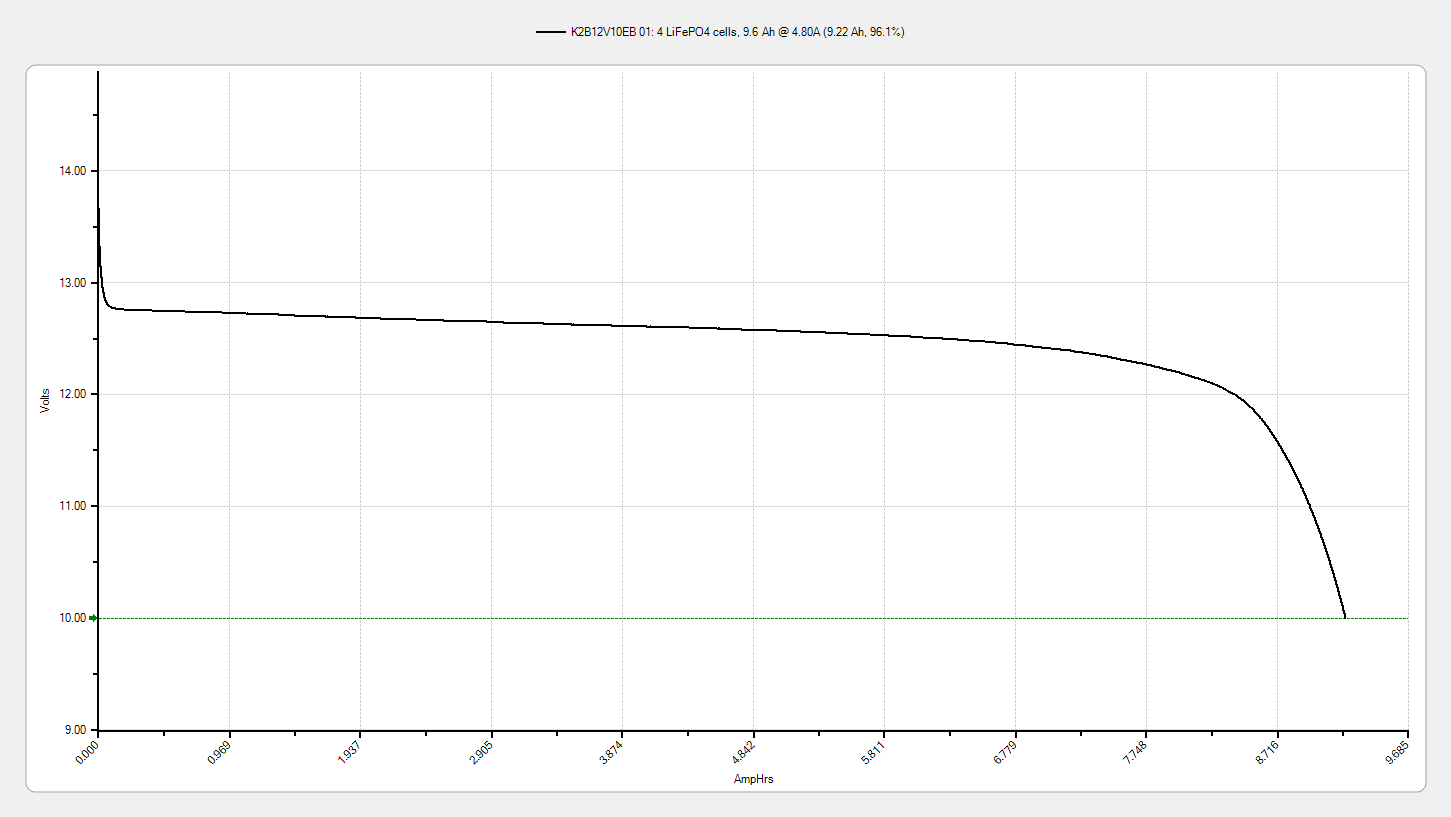
  • Their output voltage is flat and stays very close to the “ideal” 13.8 VDC required by ham gear
  • They deliver that flat output voltage under high current load for about 80 to 90% of their rated capacity.
  • They last about 4 times longer
  • They can be charged and left unattended on a shelf for months

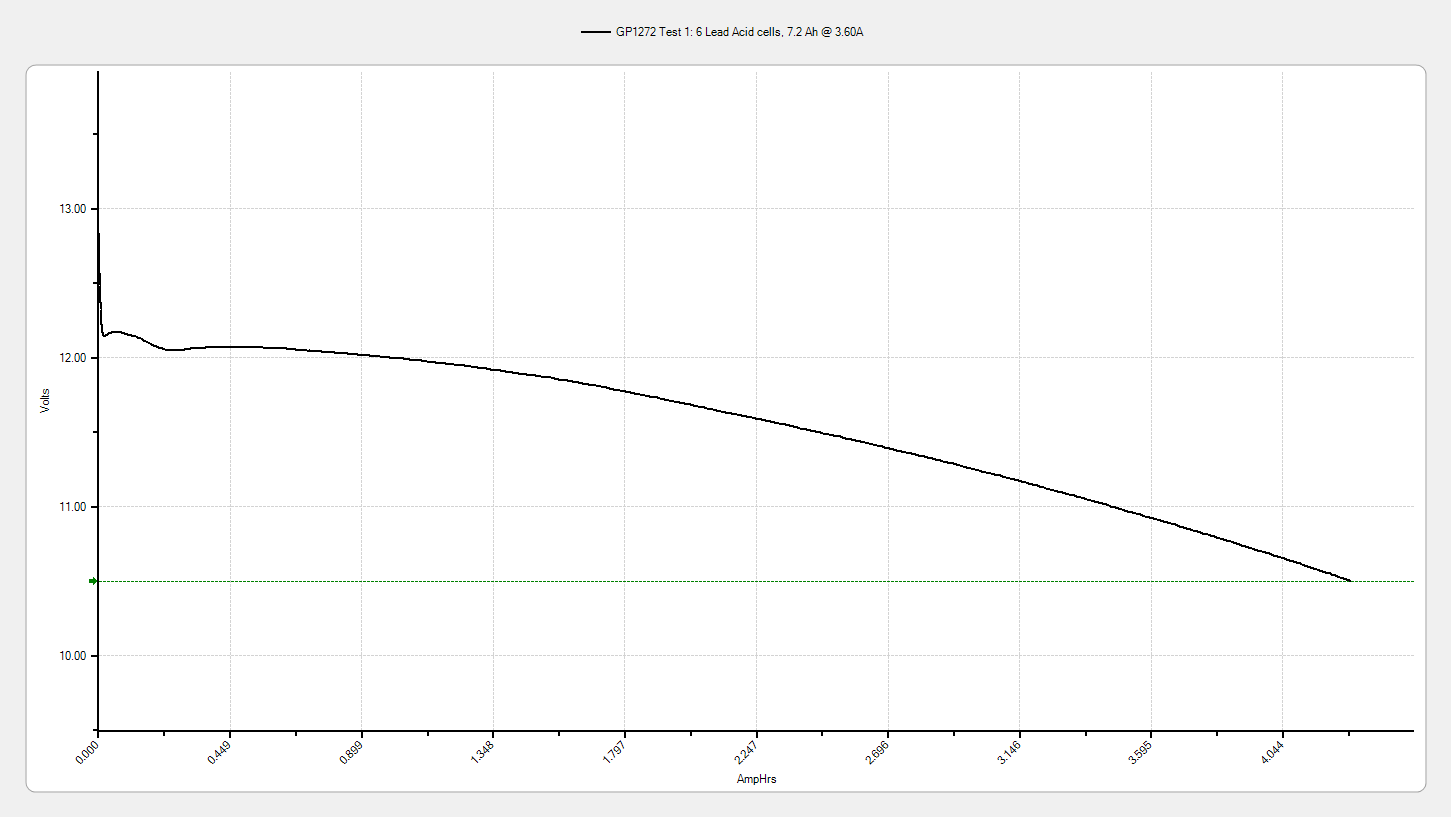
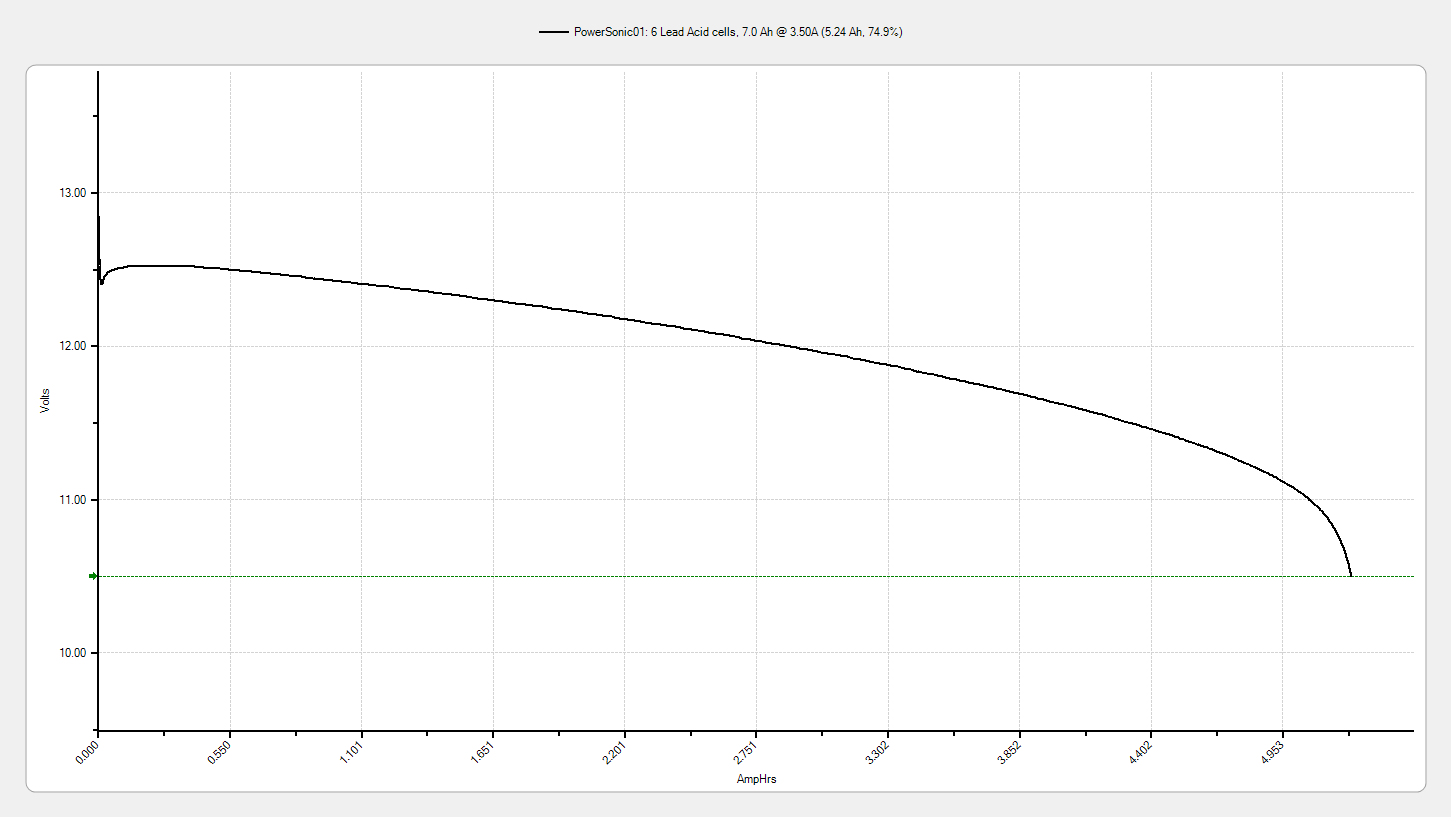
As a benchmark, a 26 AH LiFePO4 battery weighs about 7 pounds, costs about $200, and will last about 2,000 charge discharge cycles.  It will retain about 75% of its total capacity after being charged and stored for a year.  On the other hand, a 26 AH SLA battery weights about 21 pounds, costs about $70, and will last for 500 charge/discharge cycles.  It will be permanently damaged if left untended for a year, and would have only about 50% of its capacity remaining after sitting idle for just a month.  Finally, during discharge, the SLA battery voltage will rapidly drop from about 12.8 volts down to about 10.0 volts.

Posted in Alternative Power, From the OM | 2 Comments

Extending Your Honda Generator Run Time

Outside of raising an antenna tower, probably the most dangerous activity during Field Day is refueling the generator.   A few clubs have back-up generators that they can quickly switch over.  Other clubs have battery backup that allows the rigs to continue to operate during refueling.  Some clubs simply kill power and wait for the generator to cool down enough to safely refuel.  However there are those clubs that decide to refuel while the generator is running — something that is VERY dangerous.

Many clubs use small Honda inverter generators, like the EU-2000i, because they are VERY quiet and are fuel efficient.  Their inverter output produces much cleaner output power too.  A generator like the EU-2000i will produce full output for about four hours before needing to be refueled.  But there is an easy way to extend that run time to over 28 hours — more than enough for the entire Field Day event — by using an extended run fuel system.

You can find assembled extended run fuel systems online by Googling “Honda Extended Run Gas Tank”.  You can even order them through Amazon.com by searching for the same thing.  The entire system tends to be pretty expensive, running about $180. All the parts except the Custom Extended Run Fuel Cap can be purchased cheaper locally, and if you are a boater, you probably have everything you need except for the cap and one gas fitting.  Four items are required:

1) Honda Extended Run Fuel Cap:  This is the only uncommon part.  Many vendors sell these on eBay and Amazon.  Expect to pay about $35 with shipping.

Extended Run Gas Cap

2) Marine Gas Fitting:  These are brass fittings designed to mate with the 1/4″ opening on the fuel cap or marine gas tank.  If you have a boat, pick a fitting that matches your existing fuel line/tank.  They sell for about $4 at Walmart.

Marine Gas Fitting

3) Marine Fuel Line:  This is the hose that connects your Marine Gas Tank to the Extended Run Gas Cap.  Its couplings should match the Marine Fuel Fittings you are using (like Johnson/Evinrude).  Expect to pay $20 to $30.

Marine Fuel Line

4) Marine Fuel Tank:  Expect to pay $25 to $50 for a new 6-galon fuel tank.  They generally don’t come with the fuel fittings, so be sure to buy one that matches your fuel line and Extended Run Gas Cap fittings.

Marine Gas Tank

Using the Extended Run System:

  1. Fill the generator gas tank to near the top
  2. Cap the generator gas tank with the Extended Run Cap, rather than the usual Honda supplied Cap
  3. Fill your marine fuel tank
  4. Attach the fuel line to the marine fuel tank.  Press the primer bulb several times to fill the fuel line and bulb.
  5. Open the vent on the marine fuel tank
  6. Place the marine fuel tank as far from the generator as your fuel line will allow, level with the generator
  7. Attach the fuel line to the Extended Run Cap
  8. Start the generator and enjoy 28+ hours of run time without refueling

The system works by vacuum, drawing fuel from the marine tank into the Honda tank as fuel is consumed by the generator.  So it isn’t gravity fed.  On the other hand, I doubt that the generator would draw fuel up hill — so keep the tank and generator on the same level.  I used such as system following storm damage in 2011 which allowed me to refuel every other day during daylight hours, as my power demand was low.  Just remember to follow the manufacturer’s recommendation for oil changes — its easy to rack up a lot of hours when running with such a system.

Posted in Alternative Power, From the OM, Gear | 1 Comment