Correct Setup to Use a IC-9100 with WSJT-X

While I don’t generally use my IC-9100 on HF anymore (keeping it mostly for satellite work on VHF/UHF), I do follow the Yahoo IC-9100 Discussion Group, and a great number of people post seeking help using the IC-9100 with digital modes.

The most common misconception is “How do I hook my IC-9100 and SignalLink USB up?”  Well, the answer is you don’t.  The IC-9100 has everything it needs to run digital modes built into the radio (basically the equivalent of a SignaLink USB is built into the radio).  You use a single USB cable (less than 1 meter in length) to gain access to rig control, and soundcard radio audio in/out.

The second most common misconception is somehow becoming convinced that you need to use “USB” (as in Upper Side Band) as the RX/TX mode. That’s correct for a microphone, but very bad practice for digital modes.  You want to use “D-USB” (as in Digital Upper Side Band).  This will ensure that the compressor is turned off, along with the RX and TX tone adjustments that would wreck havoc with your signal quality.

And the most common issue is “I can decode signals fine, but nothing comes out on transmit” or “My rig doesn’t enter transmit”.  In the latter you need software that will send a CAT command to the radio that will enable/disable transmit, or you must use VOX (which can be difficult to get setup due to the restrictions on audio input level to avoid distortion).  In the former typically the modulation source has not been setup correctly.

The key to success is getting a bunch of settings inside the radio to match a bunch of settings in your digital mode software.  In this case, I’m describing WSJT-X (Version 1.6.0), the latest software from K1JT that supports JT65, JT9, and WSPR.

Begin by getting your IC-9100 Menu Settings set properly:

  • Menu 56 USB MOD Level “25%”
  • Menu 58 DATA OFF MOD “MIC”
  • Menu 59 DATA MOD “USB”
  • Menu 60 CI-V Baud Rate “19200”
  • Menu 61 CI-V Address “7Ch”

Often, older software doesn’t allow the correct default value of the CI-V Address (7Ch) to be used, but WSJT-X is expecting that address to be used when using the IC-9100.

Note that the USB MOD Level of 25% is going to be close, but your particular radio might need some adjusting.  The way you figure that out is to get the radio into transmit mode (perhaps using the “TUNE” button in WSJT-X) and adjusting the USB MOD Level until there is ZERO ALC on your meter.  If you are showing ALC action, then your transmit audio is going to be distorted.  It is a VERY sensitive adjustment.  27% causes mid-scale ALC in my case.

Likewise you are going to have to adjust the incoming level as well.  Usually I run with AGC turned off (this prevents stronger signals from blanking out the display).  If you are a “all knobs fully CW” sort of operator that will either blow out your speaker, or damage your hearing if you keep the RF gain at maximum.  Turn the RF gain all the way down, then turn off the AGC.  Slowly ramp the RF gain up until the WSJT-X incoming level meter is right around mid-scale when no signals are being received. (Note the blue slider control to the right of the meter should be at mid-scale.)  In my case, with the AGC turned OFF, a setting just beyond 9 O’clock will cause a mid-scale audio input level (I will see +40 to +50 during the active part of the JT65 minute).

The WSJT-X Radio Settings look like this for the IC-9100 (my lower COM port is COM5):

WSJTX Radio Settings

The WSJT-X Audio Settings look like this for the IC-9100

WSJTX Audio Settings

Posted in IC-9100, Operating, WSJT-X | 74 Comments

DXCC Update for June

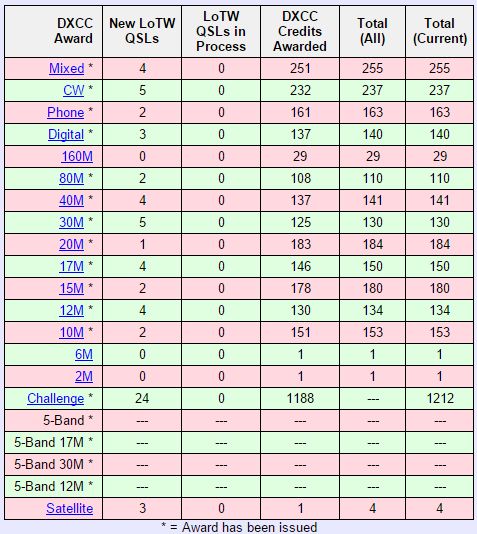
Not much of a change in the last month, pretty much matching the sharp decline in solar activity as the cycle fades into history.

DXCC Update

So in the past month, one new country has been added, bringing the total to 255 (my goal for the year), and 3 new band-country points (1206) for the Challenge.

ssn_predict_lAs of today, July 2, there have been 7 days in a row with no sunspots, and the SFI is down to 74.  However the geomagnetic conditions are fairly quite.

Posted in DX, Propagation | Leave a comment

UKube-1 Downlink 1 KHz High?

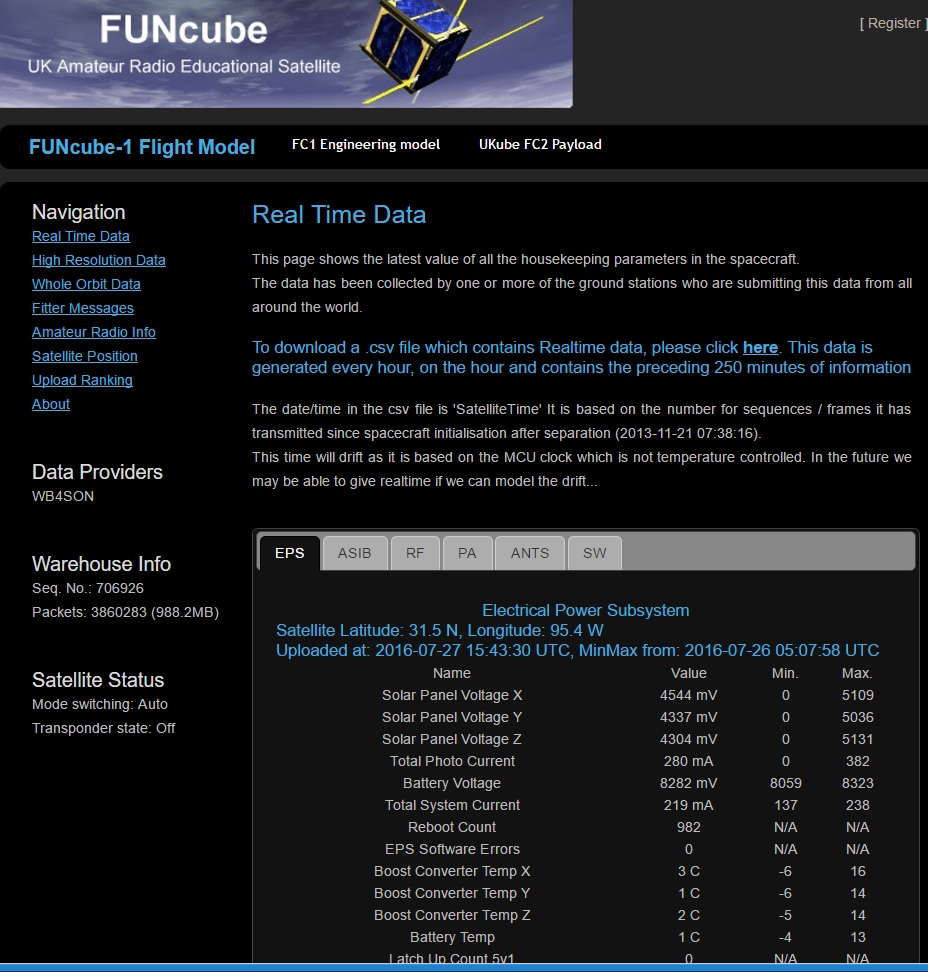
For the third day in a row I’ve been monitoring the FUNcube-2/UKube-1 telemetry downlink, and have determined for a detected tone frequency of 1500 Hz according to the Funcube Dashboard software, I need to set the Downlink frequency to 145.916 KHz.  This is about 1 KHz higher than the published values.

I’ve also noted a periodic tremendous increase in noise on the downlink, that almost entirely wipes out the telemetry.  This noise lasts for about a minute then goes away.  From comments I’ve read this might be due to the main experiment transmitter going on the air. I’ll make attempts to capture this on a video in a future pass.

UKube-1 2


Posted in Satellite, UKUBE-1 | Leave a comment

First UKube-1 QSO

Paul, N8HM (FM18), who posted the message about FUNcube-2/UKube-1 being active, happened to be my first SSB QSO at 17:18 UTC today.

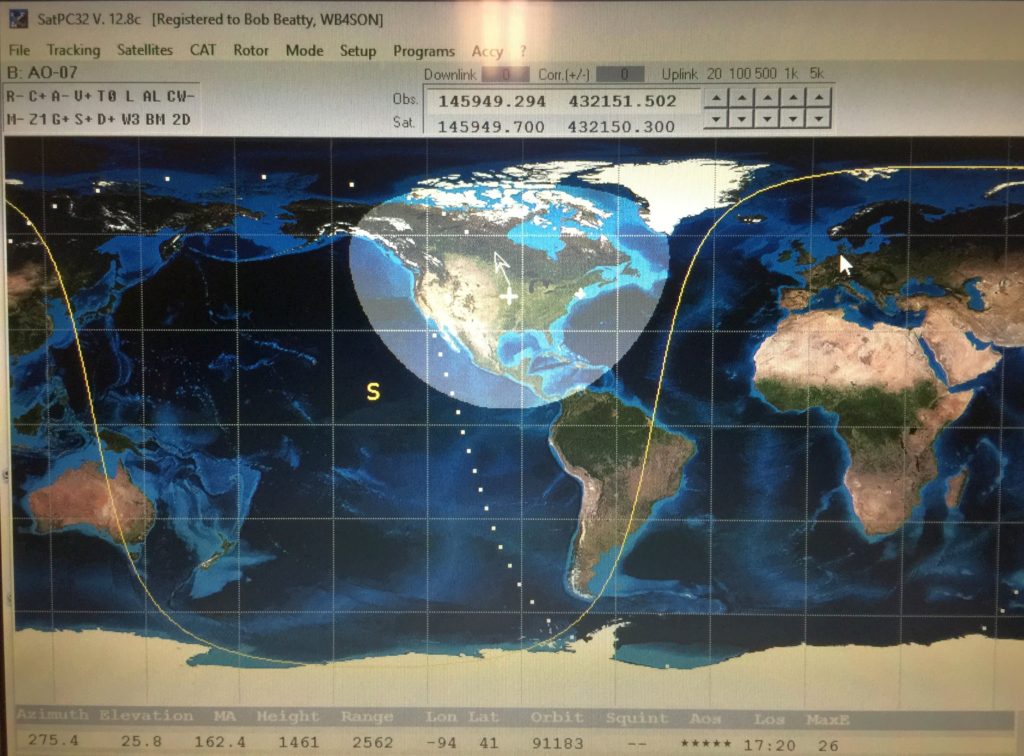
My TX offset was 14.3 KHz higher than specified, but for this first time, at least, things seemed to be stable (AO-73 seems to drift quite a bit during a pass).  I had no problem using SatPC32 in full UL/DL Doppler control, maybe varying a few hundred hertz over the pass.

I would also say that signals seemed stronger than I’m used to.  However slightly after mid-pass some wideband noise wiped out my RX and remained on for about a minute — I’d guess noisy microwave, but it wasn’t mine.

SatPC32 Doppler.sqf file settings for my IC-9100 are:

UKUBE-1,145940,435084.6,CW,CW,REV,0,0,CW
UKUBE-1,145940,435084.3,USB,LSB,REV,0,0,Voice U/V
UKUBE-1,145915.0,,USB,,,,TLM

Anyway, nice to work a new bird.  Thanks Paul!

UKUBE1 18 Jun Pass 1311L

Posted in Satellite, UKUBE-1 | Leave a comment

Yet Another New Satellite – UKube-1

I noticed a day or two ago that the UKube-1 transponder had been turned on.  I believe it is going to be left in that mode full-time.  I finally had a chance to capture a telemetry frame today during a 1136 AM pass.

The same software Funcube Dashboard, is used to decode the UKUBE-1 telemetry, and no sooner than I had 145.915 entered into my Doppler.sqf file for SatPC32, then I heard the hiss of the 1.2K BPSK, and a few seconds later I was rewarded with a captured frame:

UKUBE 1 First Telem Frame

Notice all the First Column “Failed” data — this is due to the fact that Funcube-2 is integrated into another larger satellite (UKube-1).  Also don’t let the title of the program “FUNcube-1 Dashboard” fool you.

Going to the data warehouse, you select the “UKube FC2 Payload” on the right side, and sure enough you can see your data posting:

UKUBE1 Data Upload 1

UKUB1 11 packets

Note that UKube-1 is using the same boards as AO-73, so they have the same thermal issue on the uplink receiver.  Reports indicate the actual frequency is 12-15 KHz higher than the posted values:

  • 145.915 MHz FUNcube-2 telemetry 1k2 BPSK
  • 145.930-145.950 MHz FUNcube-2 transponder downlink
  • 435.080-435.060 MHz uplink (but more like 435.095-435.075 MHz)

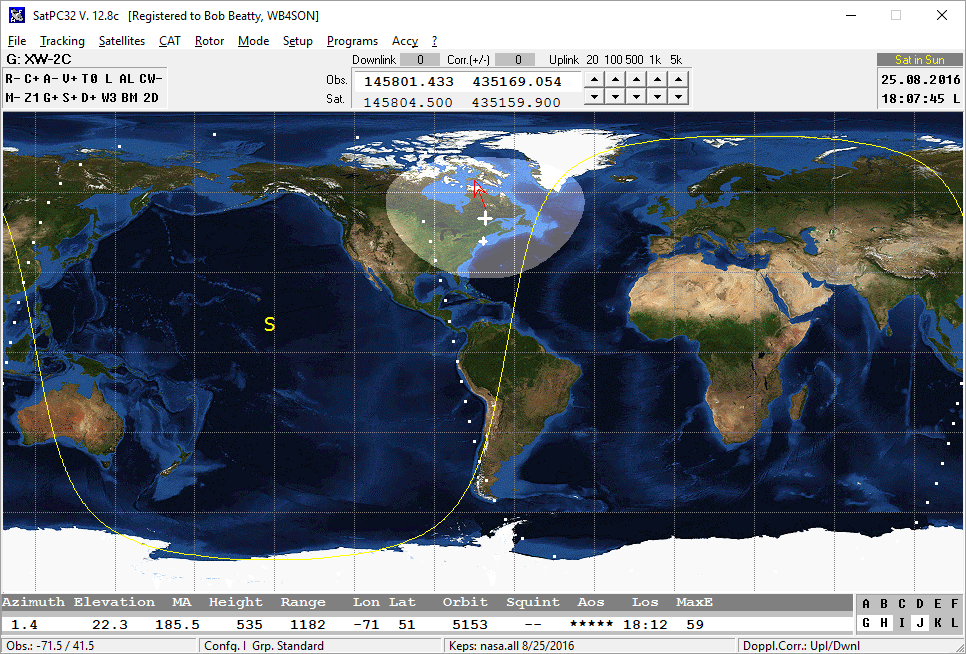
By the way, this is the 12th communication satellite that is in my SatPC32 list (ISS, AO-7, FO-29, NO-44, SO-50, AO-73, NO-84, AO-85, XW-2A, X2-2C, XW-2F, UKube-1).  I’m maxed out!

Posted in Satellite, UKUBE-1 | Leave a comment

Field Day 2016 Satellite Passes for FN41

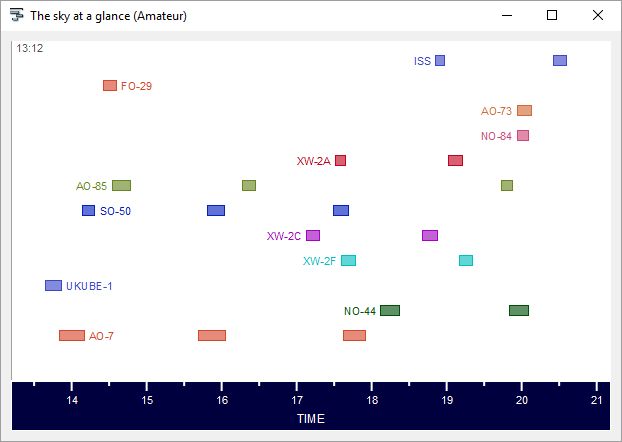
The table of times listed below will likely be off a bit since FD is about 10 days in the future and the TLEs will have changed slightly by then.  However it is good enough for planning purposes.  Daylight and early evening optimal passes are colored in red.  Pointing a beam at the peak azimuth and about 2/3 the peak elevation will be an optimal setting for a fixed antenna.

All times are in EDT and based on a FN41 (Rhode Island) location:

Satellite                 AOS                 LOS Duration Peak AZ Peak EL
————————————————————————-
AO-07 6/25/2016 1:56:18 PM 2:16:55 PM 00:20:37 55.1° 28.1°
FO-29 6/25/2016 2:00:21 PM 2:19:27 PM 00:19:06 267.9° 25.1°
AO-07 6/25/2016 3:47:08 PM 4:10:16 PM 00:23:08 254.6° 72.5°
SO-50 6/25/2016 4:18:03 PM 4:32:33 PM 00:14:30 115.5° 39.7°
XW-2C 6/25/2016 5:38:05 PM 5:49:40 PM 00:11:35 71.0° 30.3°
XW-2A 6/25/2016 5:40:31 PM 5:49:34 PM 00:09:03 65.2° 11.3°
AO-07 6/25/2016 5:44:01 PM 6:01:39 PM 00:17:38 272.7° 12.9°
SO-50 6/25/2016 5:58:44 PM 6:13:01 PM 00:14:17 313.7° 29.5°
XW-2F 6/25/2016 6:23:13 PM 6:35:21 PM 00:12:08 257.5° 70.8°
XW-2A 6/25/2016 7:12:01 PM 7:23:04 PM 00:11:03 260.6° 40.5°
XW-2C 6/25/2016 7:12:46 PM 7:23:36 PM 00:10:50 267.4° 17.4°
AO-73 6/25/2016 8:22:23 PM 8:34:21 PM 00:11:58 66.9° 21.7°
AO-85 6/25/2016 9:47:58 PM 10:03:26 PM 00:15:28 115.6° 38.5°
AO-73 6/25/2016 9:58:06 PM 10:10:49 PM 00:12:43 263.8° 31.5°
AO-85 6/25/2016 11:28:30 PM 11:43:55 PM 00:15:25 312.2° 34.8°
SO-50 6/26/2016 12:49:19 AM 1:03:17 AM 00:13:58 48.7° 37.1°
FO-29 6/26/2016 1:09:54 AM 1:26:12 AM 00:16:18 98.0° 51.8°
SO-50 6/26/2016 2:30:02 AM 2:43:13 AM 00:13:11 247.3° 26.0°
FO-29 6/26/2016 2:55:27 AM 3:10:06 AM 00:14:39 299.9° 21.7°
AO-07 6/26/2016 3:48:30 AM 4:10:48 AM 00:22:18 99.1° 39.0°
AO-07 6/26/2016 5:41:21 AM 6:03:47 AM 00:22:26 296.6° 49.4°
XW-2F 6/26/2016 5:56:13 AM 6:06:20 AM 00:10:07 90.8° 11.9°
AO-85 6/26/2016 6:20:06 AM 6:33:26 AM 00:13:20 47.5° 30.9°
XW-2A 6/26/2016 6:35:01 AM 6:44:09 AM 00:09:08 91.5° 10.9°
XW-2C 6/26/2016 6:44:25 AM 6:56:39 AM 00:12:14 97.8° 44.8°
XW-2F 6/26/2016 7:29:40 AM 7:41:51 AM 00:12:11 285.4° 47.5°
AO-07 6/26/2016 7:35:14 AM 7:51:28 AM 00:16:14 319.0° 11.6°
AO-85 6/26/2016 8:00:48 AM 8:13:32 AM 00:12:44 247.2° 28.3°
XW-2A 6/26/2016 8:07:11 AM 8:18:06 AM 00:10:55 287.2° 38.1°
XW-2C 6/26/2016 8:19:16 AM 8:29:32 AM 00:10:16 294.6° 13.7°
AO-73 6/26/2016 9:45:03 AM 9:58:55 AM 00:13:52 98.5° 45.4°
FO-29 6/26/2016 11:20:23 AM 11:39:19 AM 00:18:56 64.2° 30.4°
AO-73 6/26/2016 11:21:46 AM 11:34:01 AM 00:12:15 294.3° 18.6°
AO-07 6/26/2016 12:59:35 PM 1:16:24 PM 00:16:49 42.9° 12.9°
FO-29 6/26/2016 1:04:03 PM 1:24:52 PM 00:20:49 259.9° 58.9°

Posted in AO-7, AO-73, AO-85, FO-29, Satellite, SO-50, XW-2A, XW-2C, XW-2F | Leave a comment

Back to AO-73 Dashboard for a Bit

The SatGate appears to be working fine, and it seems to find more unique packets than duplicate ones, so it appears to work.  Ultimately I want to package that up with a RPi running XASTIR using a TNC-Pi and a TK-762G as a stand-alone product.

I did put the rig back onto AO-73 for a bit.  During a pass this morning around 1400 UTC, I watched 98 packets decode.  Dang, I really wanted 100+  But I have a few birdies that show up toward the end of the pass, when Doppler has shifted things pretty low (I’m using SatPC32 to doppler control).  Those start to mess with the incoming data.

I also observe that there is still an unaccounted drift towards lower frequencies of about 600 Hz over the length of the pass.

image

Posted in AO-73, Satellite | Leave a comment

And Just Like That — 255 Confirmed!

So I did my daily check-and-hope of LotW today and was shocked to see a confirmation from a Botswana station contact made 2 years ago!  That was country 255, completing my 2016 DX goal.  From the date, it has to be a contact made during the CQ World Wide CW DX Contest.

Screen Shot 2016-06-03 at 4.30.05 PM

I think that this was either Neil, VA7DX or Roger, ZS6RJ operating as A25DX.

Posted in DX | Leave a comment

2016 Goal Review

At the beginning of each year I set some goals for myself.  These were the goals I set for 2016:

2016 Goals:

  • 255 Confirmed Countries
  • 1,200 DX Band-Points
  • WAS Completed on 12 Meters
  • Successful ARISS Contact at All Saints Academy
  • Teach a Technician Class for Monsignor Clarke Middle School
  • Teach a Technician Class Elsewhere
  • Complete my K1

As my DXCC update indicates, I stand at 254 confirmed countries, so one more to go (and at least three DX stations have shown me in their Club Log file — so some green stamps and mailed envelopes should take care of that.

DXCC Challenge is over 1,200 band-points now, so that one is complete.  My WAS on 12-meters is still missing WV.  With the decline in sunspots that band has very little activity.  That said I did hear WV once on 12-meters this year and failed to make a contact with them.

The ARISS contact at ASA was wildly successful, but the class at Monsignor Clarke Middle School fell through (not enough student interest for after school).  We may well hold it as a formal class during school in the fall.

Finally my K1 was completed.  I did break down and buy the internal tuner, so I will need to build that and install it at some point.

So 3 out of 7 goals completed so far.

Posted in From the OM | Leave a comment

DXCC Update

You can tell that DX hasn’t been as easy to find since I haven’t updated my DXCC info in a month or more.

As of the end of May, 2016, I have the following confirmed in LotW:

LOTW Status May 31st

Ironically, Challenge went from 1,202 to 1,203 because of a Canadian ham who confirmed a JT9 contact we had today on 17-meters.  Imagine not having Canada on all bands from where I live.  In truth I had worked literally dozens of Canadian stations on 17-meters but nobody confirmed a contact until VE7NBQ did — Thank you!

CanadaOn17m

Posted in DX | Leave a comment